Kiang Malingue is pleased to present in its New York space Receptors, an exhibition by Quinha Faria, the artist’s first solo exhibition in New York.
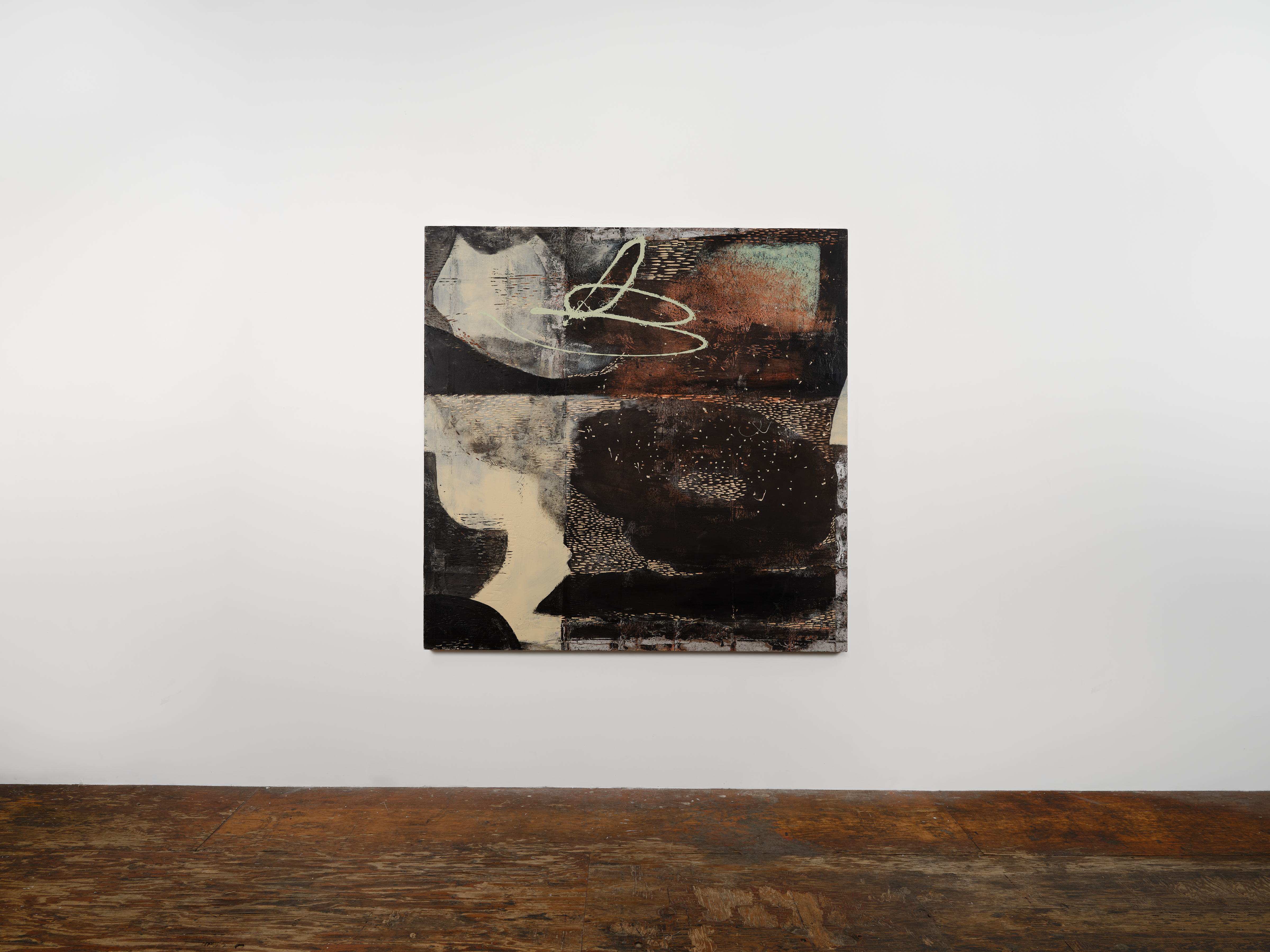
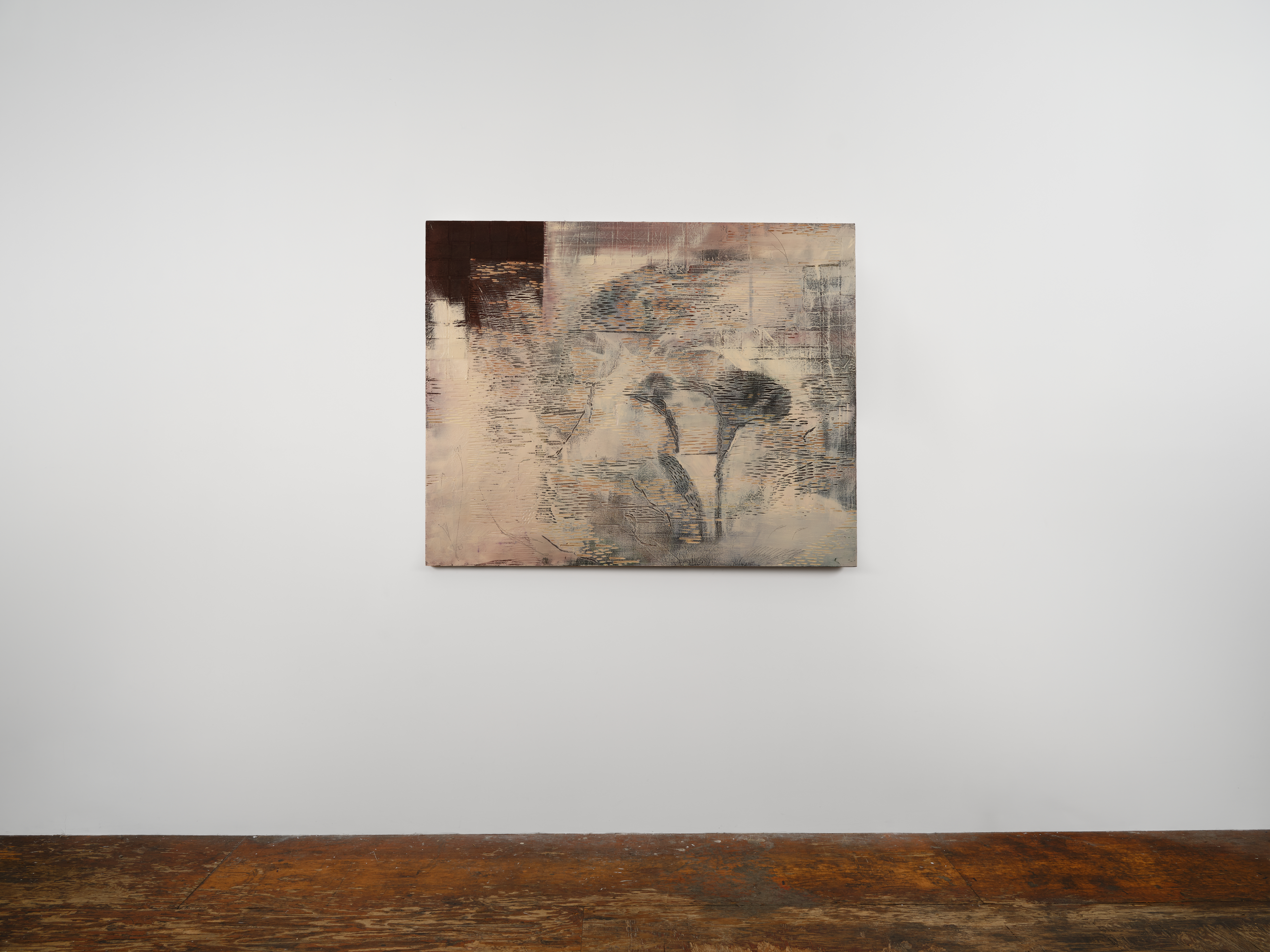
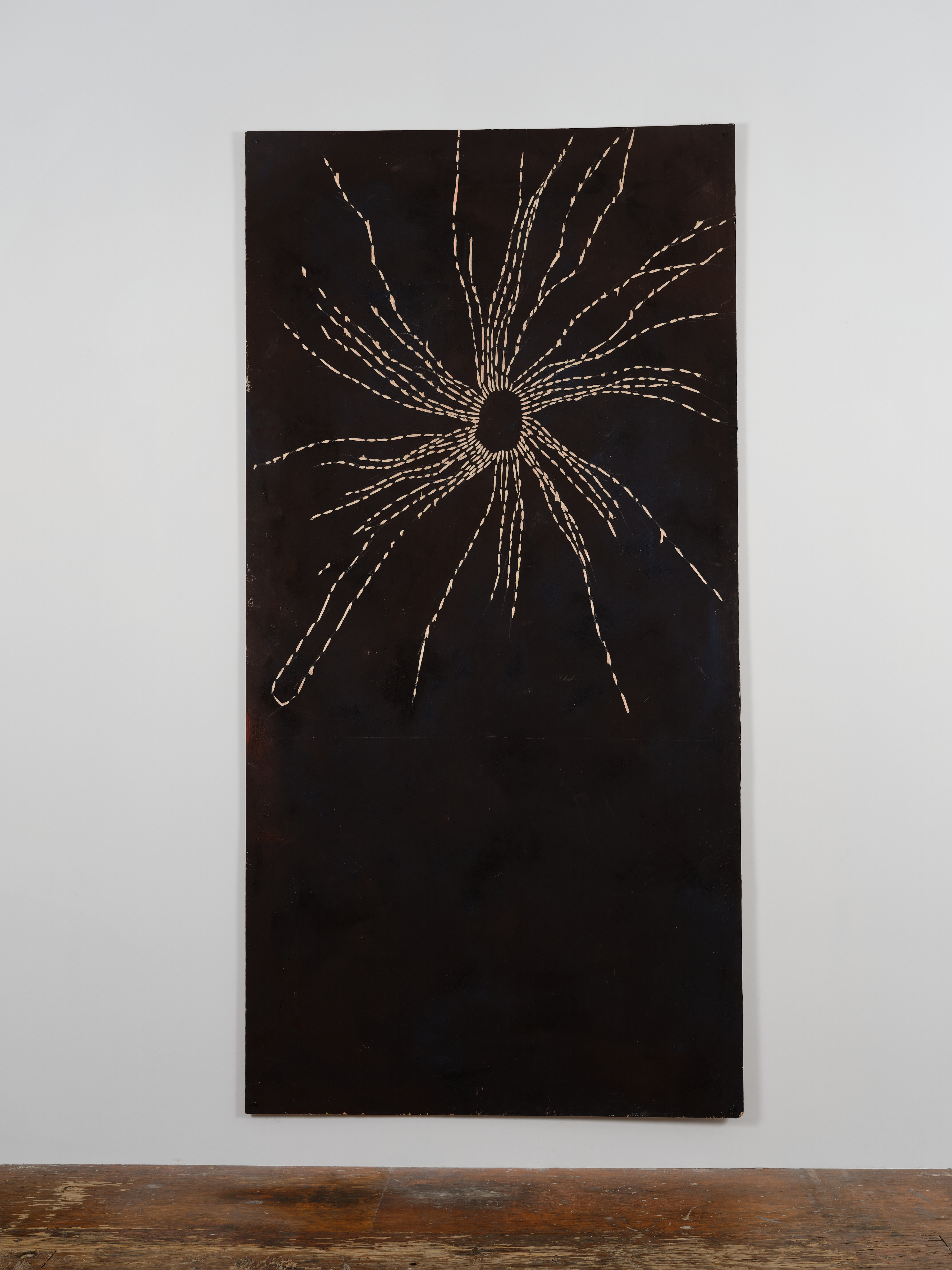
Quinha Faria activates a constellation of receptive fields, traversing natural and synthetic materials, and their transformation through woodwork and weaving, into paintings, sculptures, and installations. In a series of carved paintings, Faria begins with the subtractive hand tool woodworking methods of carving and gouging, with and against woodgrain into the substrates of birch, mahogony, and luan, where images emerge, recalling phenomena, such as landscape formation, climate occurrences, synaptic connection, or temporal leaps and psychic conditions. These markmaking are incipient records, offering shifting perceptual grounds that allow for interaction with a range of paint materials, including oil, acrylic, latex, sumi ink, pigment, tempera, fabric dye, tar, and medical-use skin marker. Toggling between actions of embedding, layering, and removing, the works, while appearing as abstract, operate as pareidolia, the human brain’s tendency to find shapes, such as in clouds, firing up our mirror neurons, as an empathetic response.
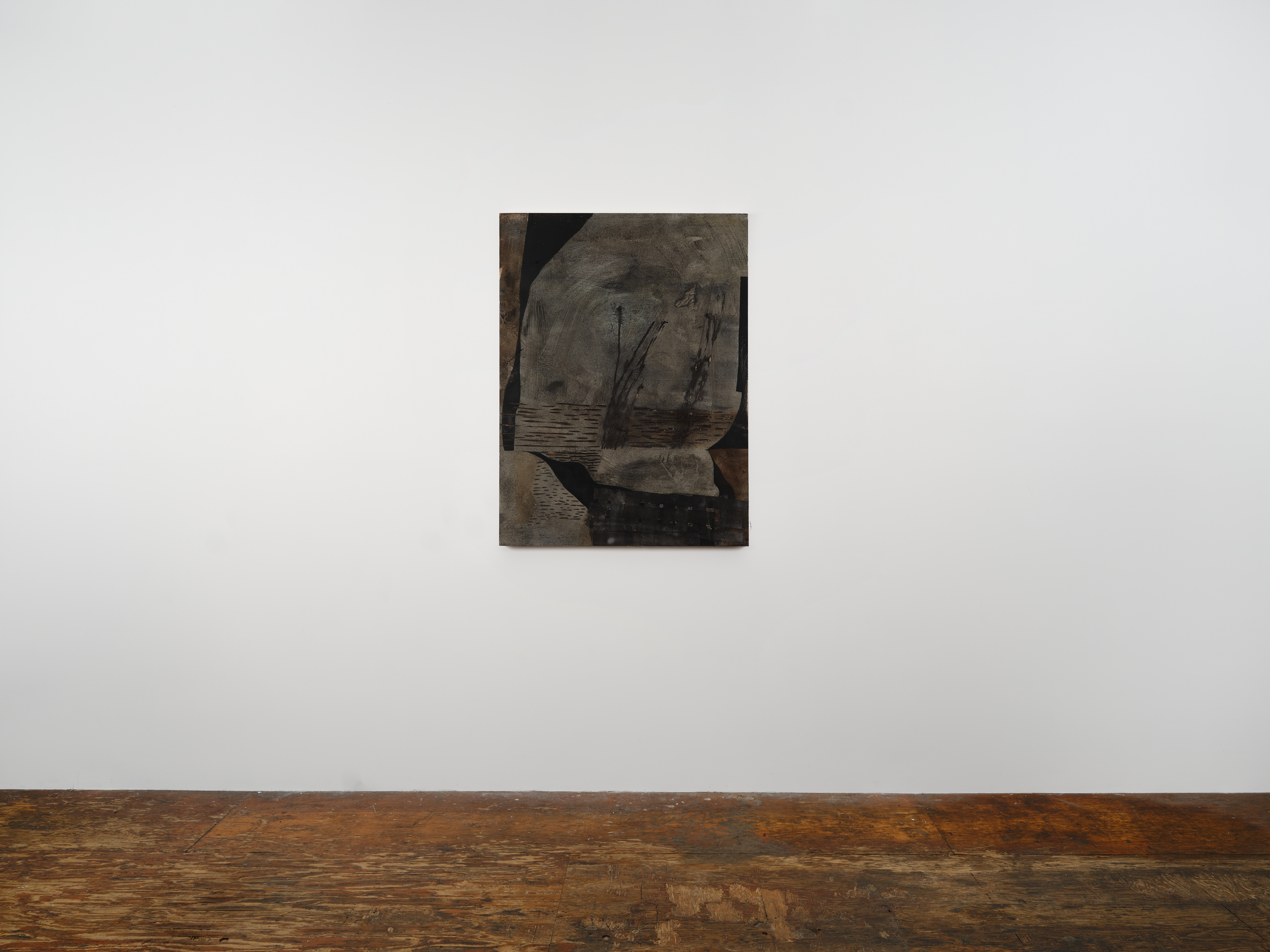
In A Trickle in the Channel, 2026, carved on luan, the horizontal and vertical marks conjure a cartography of waterways and signs of reedy plant life. Recalcitrant to narrative, it holds within it a sense of place, as in a cut-away filmic shot, an intermediary, for things to come. Varying shades of black and grey in tempera and pigment, suffused with rust-like color, forge an unstable spatial relationship, further complicated by the rapprochement or encroachment of a woven rayon fragment on the lower right. Khôra, 2026, alludes to Plato’s philosophical concept of an interval space, a formless container that generates all things, a receptacle / recipient / receiver that he describes in Timaeus as the “nurse of all becoming.” Faria holds in suspension this sense of latency, by carving into mahogany, sanding its surfaces, embedding woven rayon, and applying pigment, fabric dye, acrylic, and marble dust. Emerging are overlapping, floating forms of radiating voids, perhaps flower or wound blooms that persist, or they could be objects for transmissions, time-space portals, or parabolic antennas. Each form is shaped by its contact with the others, sharing a space, locking in an embrace, within an expanding energy field.
With a background in human physiology and critical care nursing work, Faria culls readily accessible materials to merge with provisional and building materials, summoning the bodily and social uses of objects and materials through transformation. In Binding Site, 2026, carved on luan, embedded within the layers are sheets of drawings made with surgical skin markers, used to map vascular access sites and communicate pulse points among members of the medical care team. Embedded within are patches of Tegaderm dressing, waterproof film used for wound care to protect surgical sites and secure IV catheters, while allowing in oxygen. Touching, 2025, carved on birch, contains fragments of tar paper, a material that evokes its use to cover hastily-built barracks of Japanese American detention camps during World War II, connecting to Faria’s matrilineal history as a fourth-generation Japanese American.
Faria considers artworks and their constellations as porous bodies, always in transition. In biochemistry, cell receptors embed within cell membranes composed of two layers, wherein each layer contains both hydrophilic and hydrophobic sides. Certain sensory receptors detect specific stimuli, such as light, temperature, or pressure, and transduce these signals into intracellular pathways. In neurons, some of these pathways generate electrical impulses that are integrated into broader biological systems. In this way, cells and organisms enter into relation with their environment. A receptor does not passively receive external information that arrives at its binding site. Its activity is selective and relational, shaped by context.
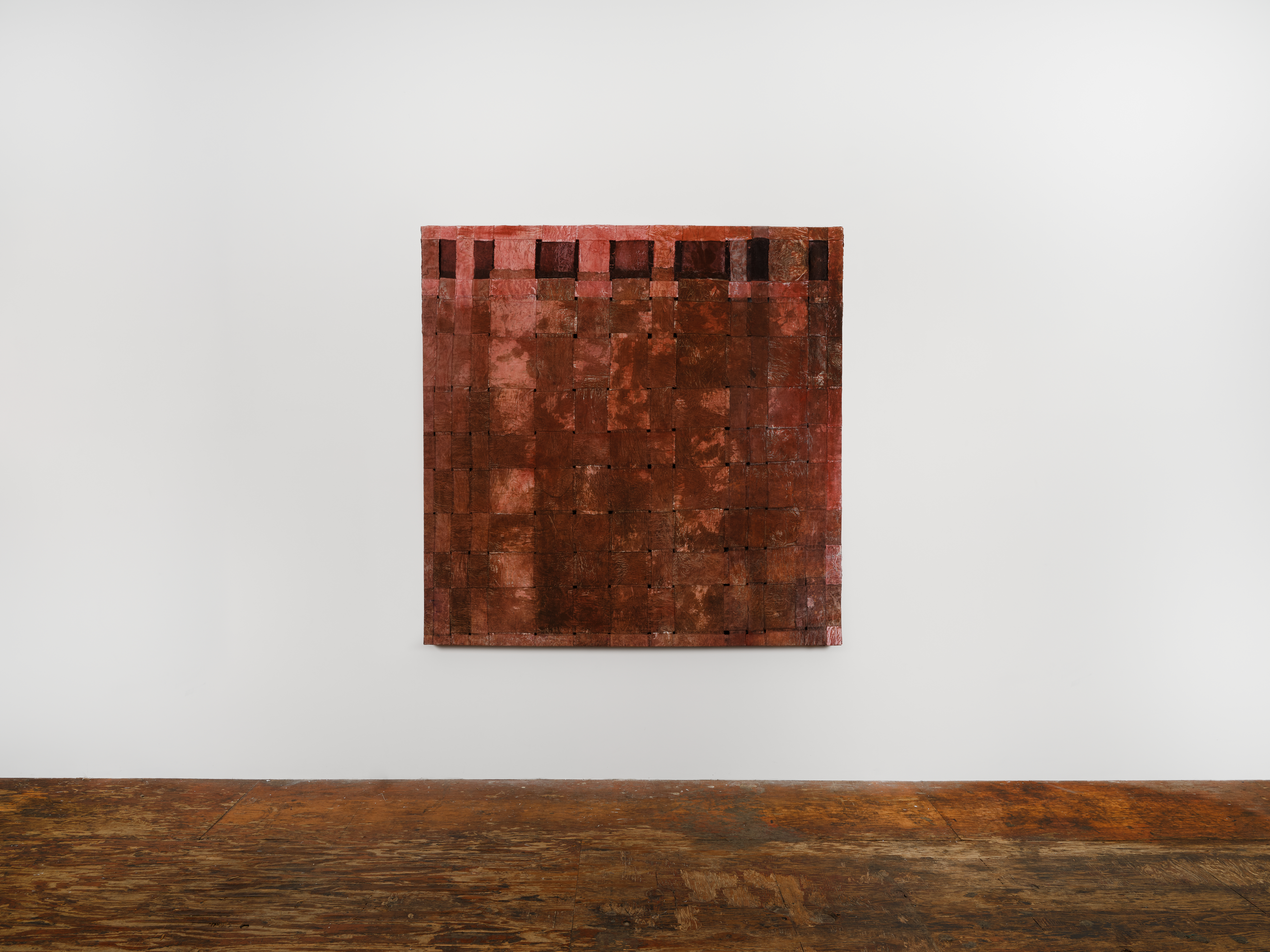
In a series of sculptural paintings, Faria weaves loose grid-like forms using varying widths of different textile materials. Rayon, a semi-synthetic fiber made by regenerating cellulose extracted from wood pulp, interweaves with a personal archive of fabric, many gifted to the artist, such as cotton bedsheets, sari, organza, carried for years from place to place, home to home. Rayon is chosen as it occupies a middle ground between the natural and the synthetic, containing a tension between its origin and its transformation in its ability to mimic silk, cotton, and linen. Its production can contribute to deforestation, air pollution, and waste water when wood pulp is sourced unsustainably. Dipped in pigment, water, glue, and laid flat to dry and shown on its recto, these works of woven grids contain gaps that seem to contend with their own structural integrity. Actively involving the body to produce the warp and weft of weaving, these provisional bonds undo linear time towards fragmentation, cycles, and dilation.
Lar Doce Lar (Home Sweet Home), 2025, interlacing two familial bedsheets, in which the printed floral patterns of their backsides are barely visible, is an incandescent entanglement. Mancha Roxa, 2025, its Portuguese title of “purple mark” translates to bruise, is treated with wood stain during the drying process, creating a haptic space of infinite depths, and an interplay of translucence and opacity between rayon and organza. Civil Dawn, 2026 is dyed with brazilwood and sumac that entwines silk and rayon in its topography. Its title refers to the time of 20 to 30 minutes before sunrise, when the sun is six degrees below the horizon, providing sufficient light conditions for visibility. Across these works, within the minute details of their vast vertical expanse, the ebbs and flows of the hardened yet still flexible fabric contain trace fossil-like routes. Flickering between permanence and impermanence, they perhaps gesture to and give shape to notions of belonging, and the conditions of diasporic timekeeping and placemaking. Faria thinks of connection as a condition of life, instability as “neither permanent nor promised.” She is interested in “how things temporarily hold together, attach, link, and bond, and what happens when those bonds loosen, shift, rearrange, or get free.”
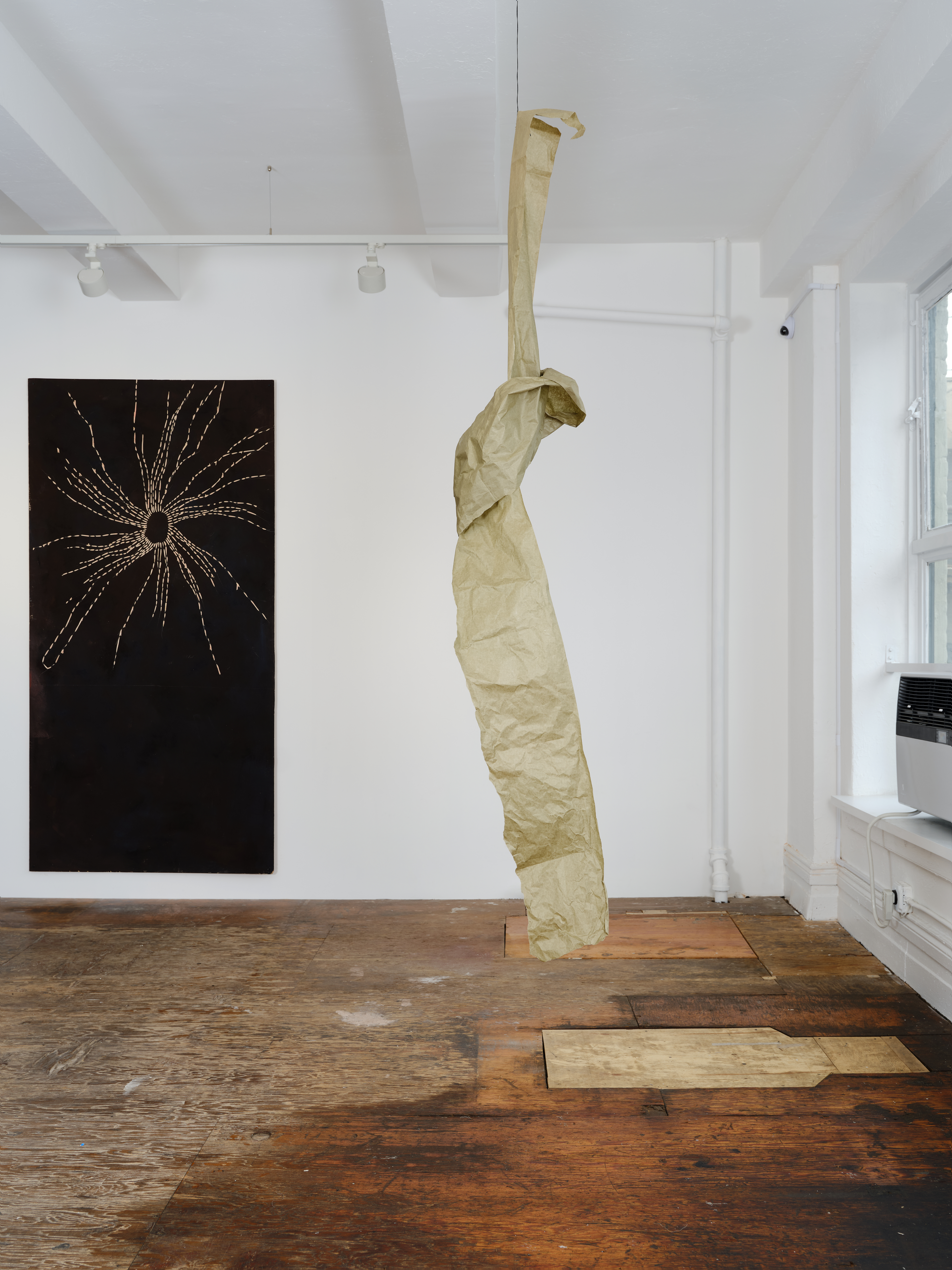
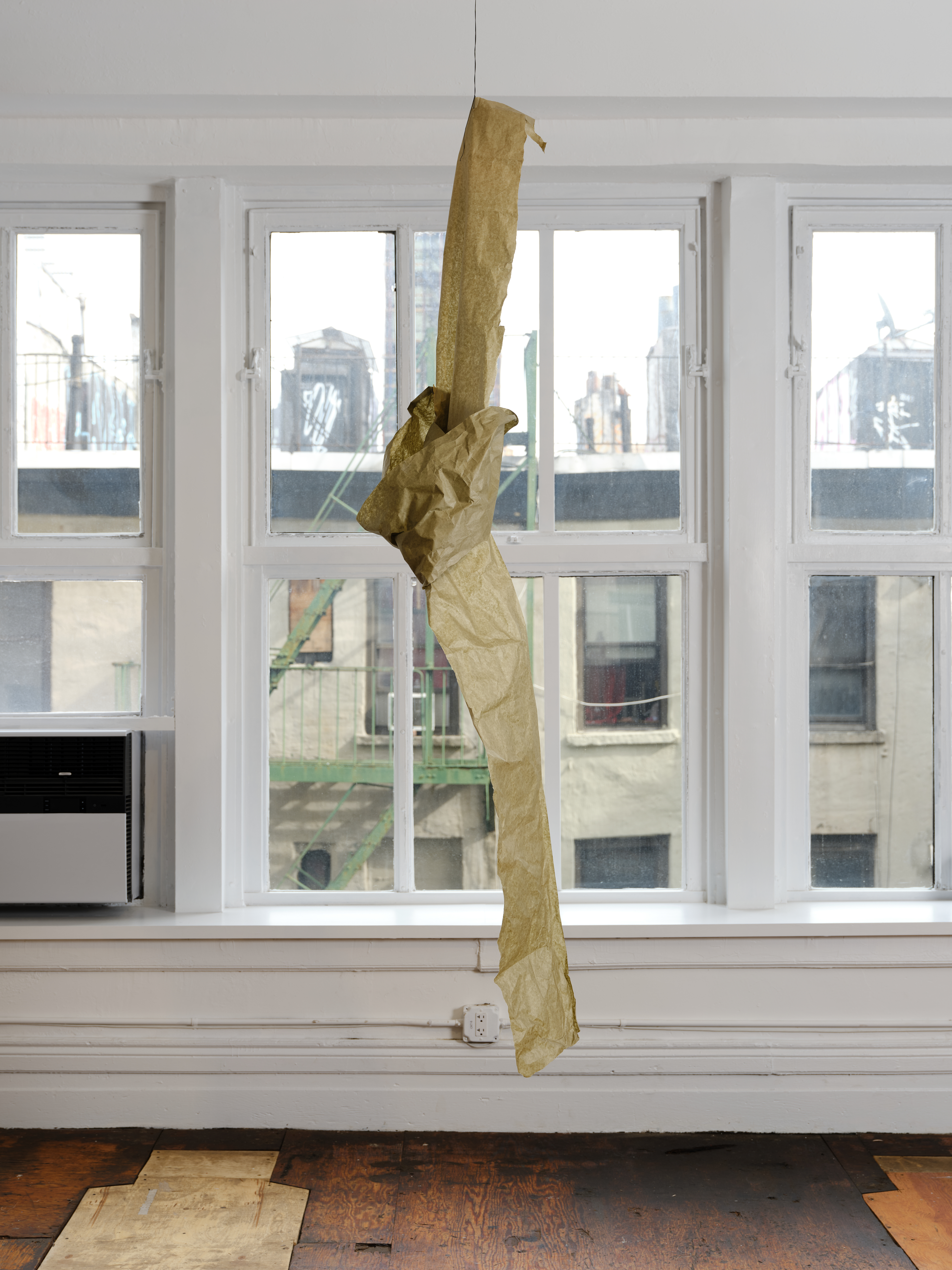
In a series of sculptural works, in supine position and in mobile suspension, that punctuate the gallery in spatial relation with paintings, Faria animates a choreography of forms, guided by her knowledge of pattern making, and interest in the transition of forms from two-dimensionality to three-dimensionality. Akin to drawings in space envisioning other worlds, the weaving of web and net formations converge into yet-to-be-known shapes that recall loops, spirals, helixes, atoms, and infinity symbols. A variety of natural and synthetic cordage, from thread, twine, to polyester nylon plastic rope, form what Faria terms the “social fabric,” which is then stretched into “systems” made out of malleable plumbing tubing joined by brass pipe connectors. Faria begins each piece from the center, radiating outwards like tree growth, simultaneously upwards, downwards, and in circumference. The use of sisal twine stems from her father’s farm in Brazil, where she first worked with the fiber to secure various bundles together. Brazil is the top producer of sisal, one of the cheapest natural fibers available, and requires a labor and time intensive harvest cycle. These sculptures, which appear as in the midst of mutation, draw a relationship between threading and reading, between the hands and the eyes, between movement and language. The viewer becomes an active participant by navigating in space through evolving perspectives.
Faria recounts the frequent experiences of encountering the cared-for and the caretaker, and the blurred distinction in their appearances, worn by physical exhaustion. This reciprocal relationship might be one way into the relationship between a viewer and an artwork. Like a part and a counterpart in a split fossil that shows on one side the skeleton and the other its impression, Faria insists that the seemingly passive is an active agent—artwork and viewer, both as care receptors. She leads us not faraway, but to an insistent here, in the possibility of ingress, a welcoming place that might lead us into another place.
(About Quinha Faria)
Quinha Faria (b. 1988, Campinas, Brazil) works across painting, sculpture, and installation. Her years working in critical care nursing at the hospital bedside shaped her interest in what cannot be collected or measured, and in the connections that emerge across overlapping networks inside and beyond the human body. Through hands-on making and close attention to how materials respond, she explores the porous relationships between physiologic, social, and environmental systems. She received an MFA from Bard College and holds a BS in Nursing from the University of Pennsylvania and a BS in Human Physiology from the University of Oregon. Her work has been exhibited at Asian Arts Initiative, Vox Populi, Mural Arts (Philadelphia), and Carnation Contemporary (Portland). Faria works and lives in Portland and New York City, USA.
Receptors
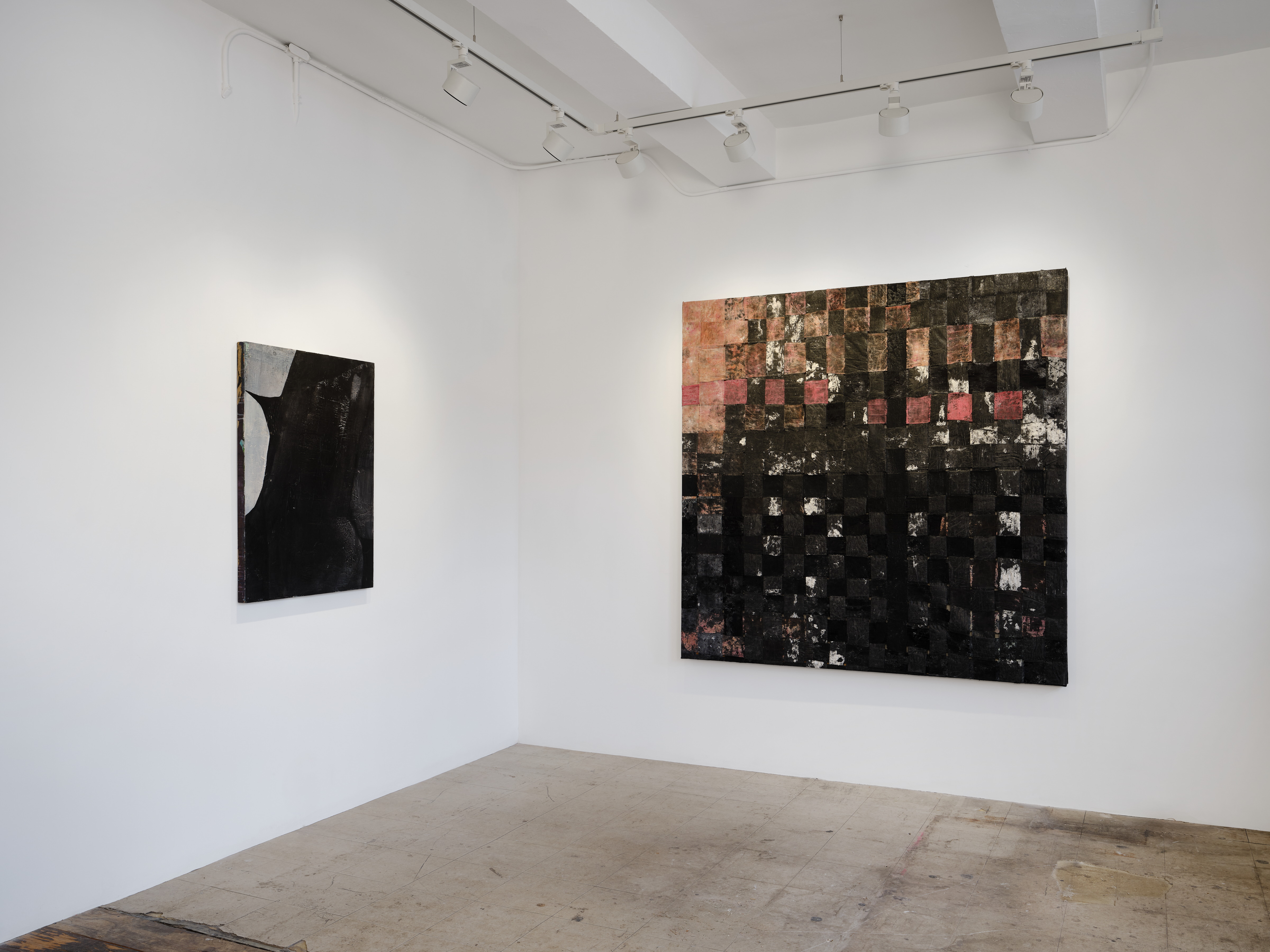
Installation view
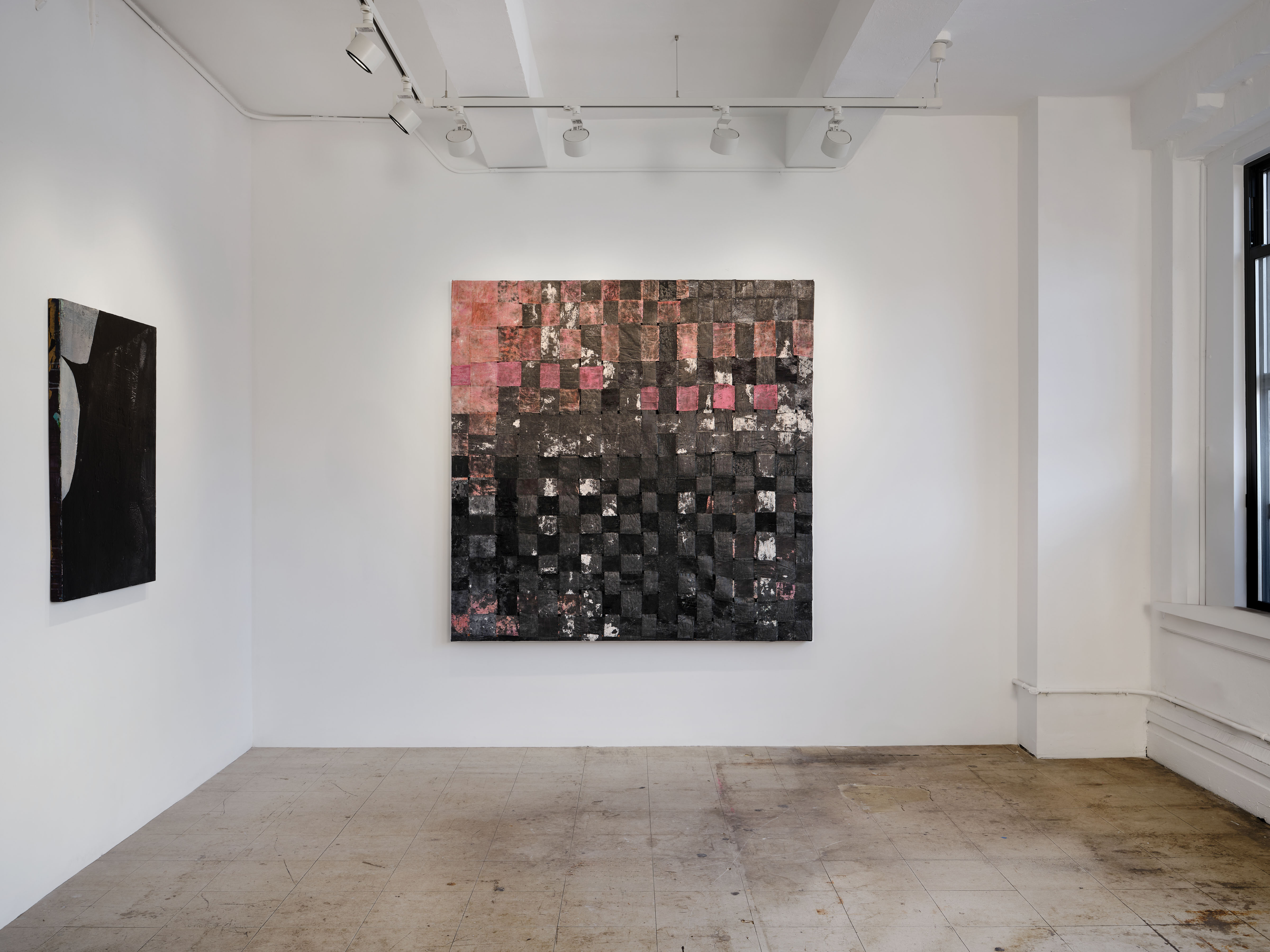
Civil Dawn, 2026. Brazilwood and sumac dyed silk, ink, rayon, adhesive compound, 72 x 72 in; 182.9 x 182.9 cm
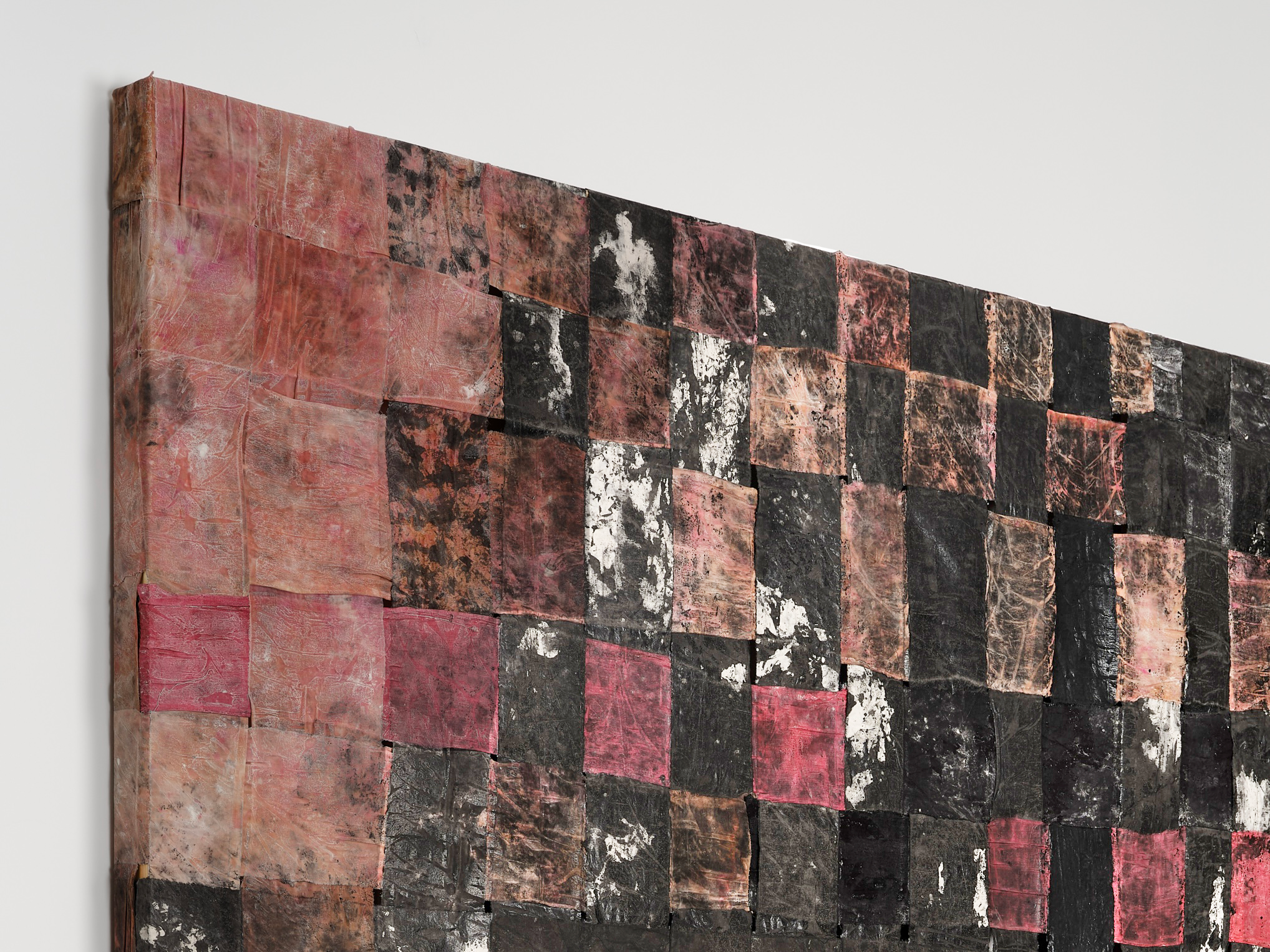
(Detail) Civil Dawn, 2026. Brazilwood and sumac dyed silk, ink, rayon, adhesive compound, 72 x 72 in; 182.9 x 182.9 cm
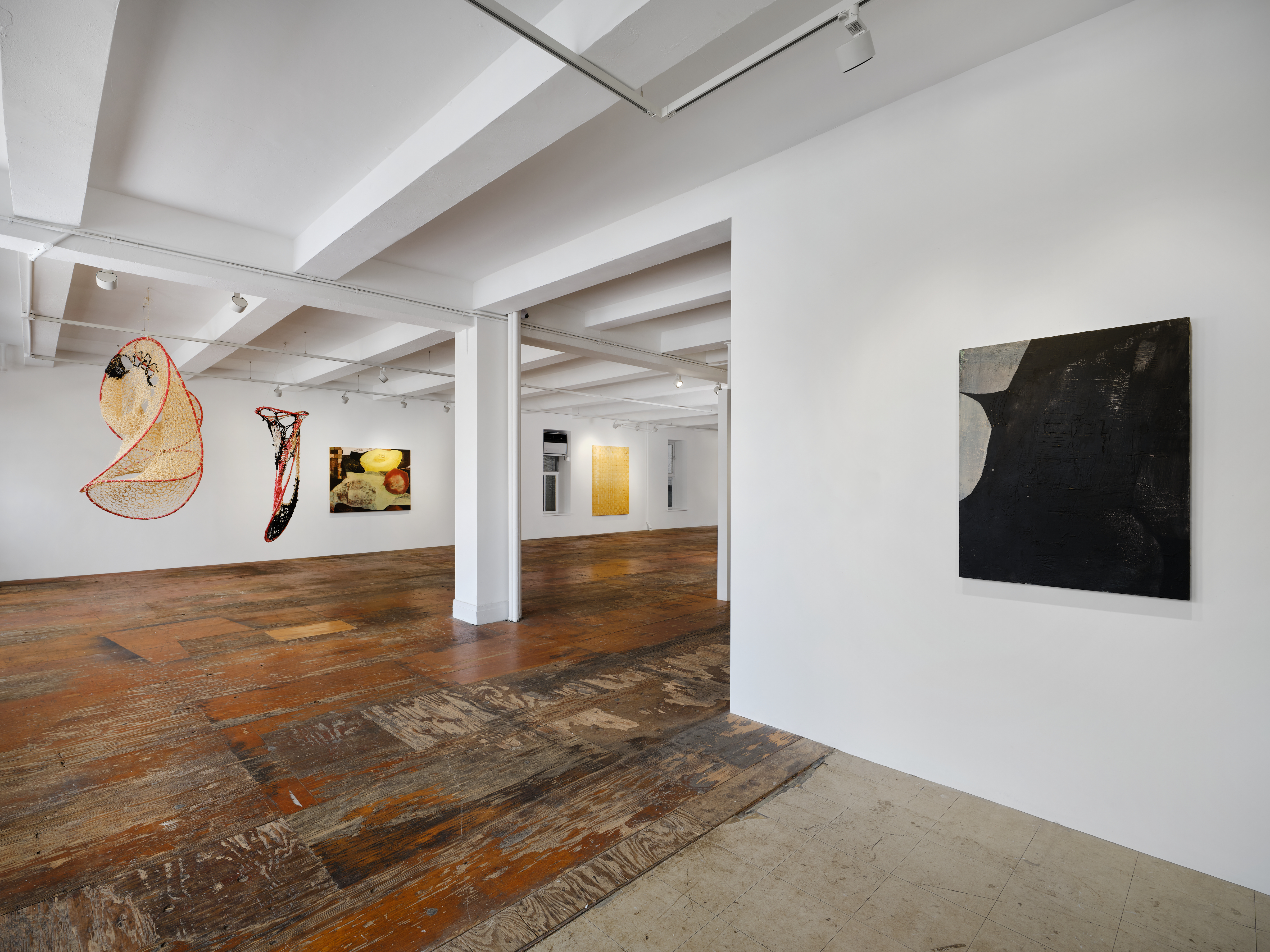
Installation view
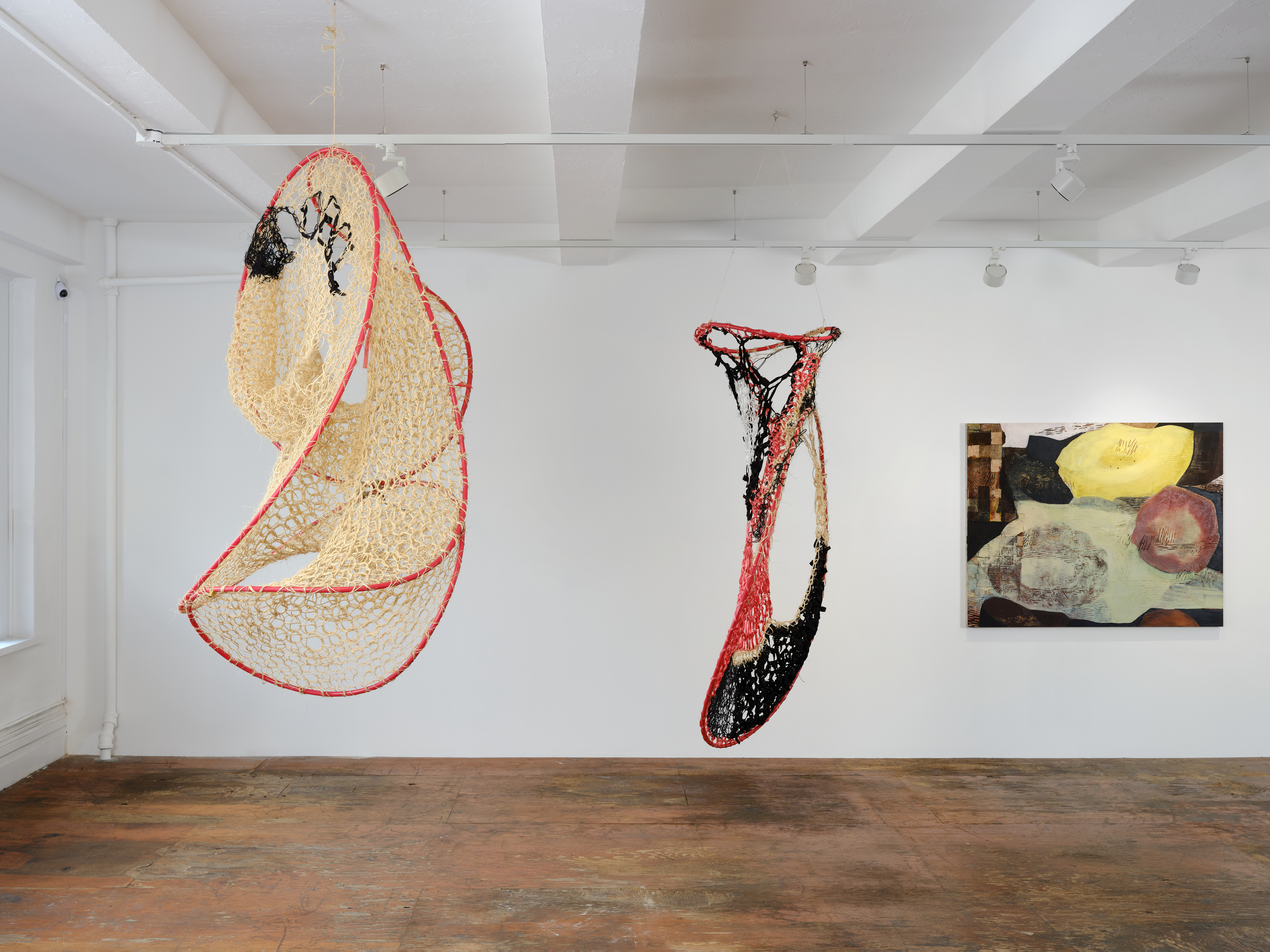
Installation view
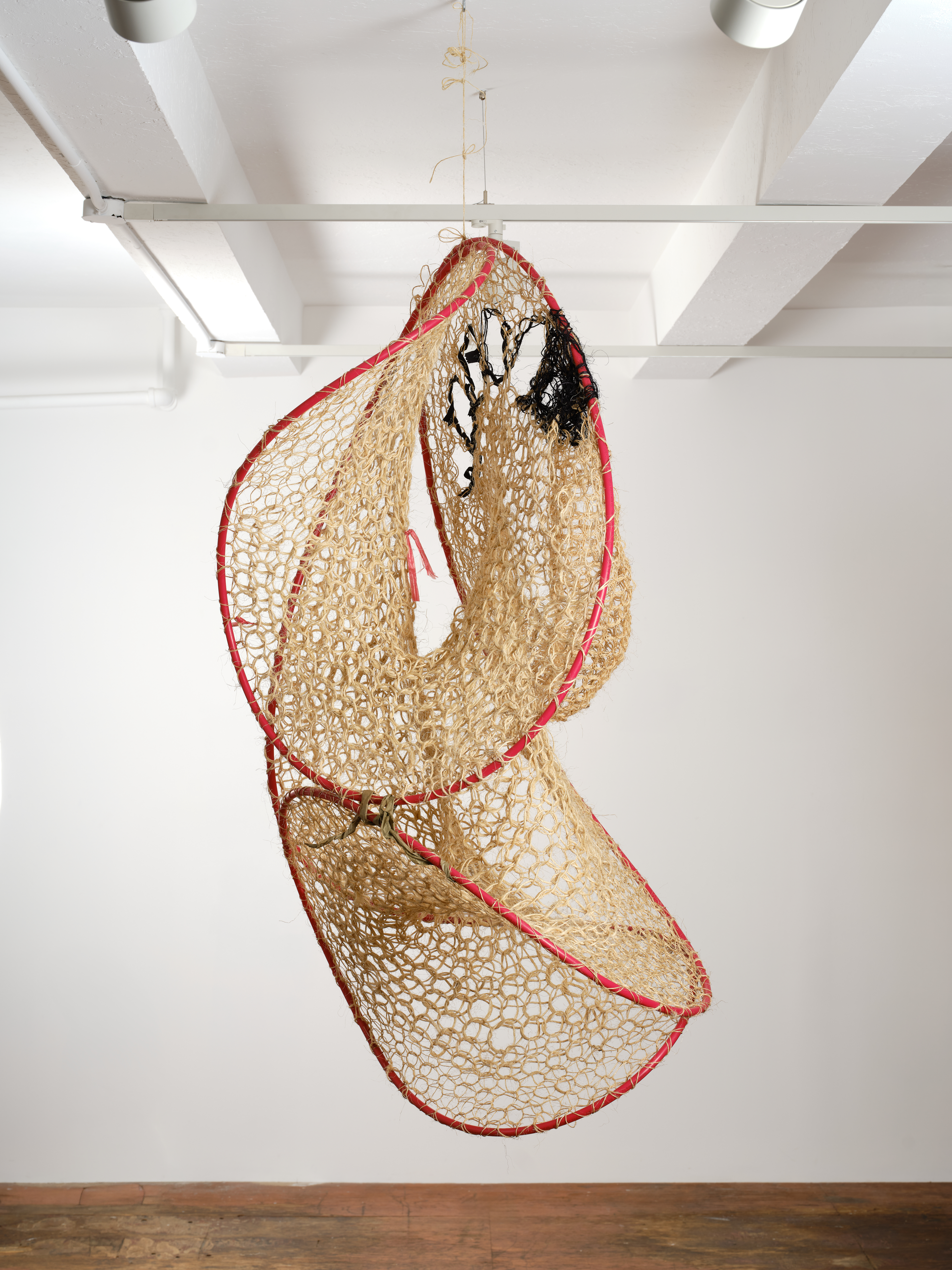
Canal, 2026. Sisal, zippers, fabric dye, masking paper, brass connector, pex tubing, 70 x 36 x 32 in; 177.8 x 91.4 x 81.3
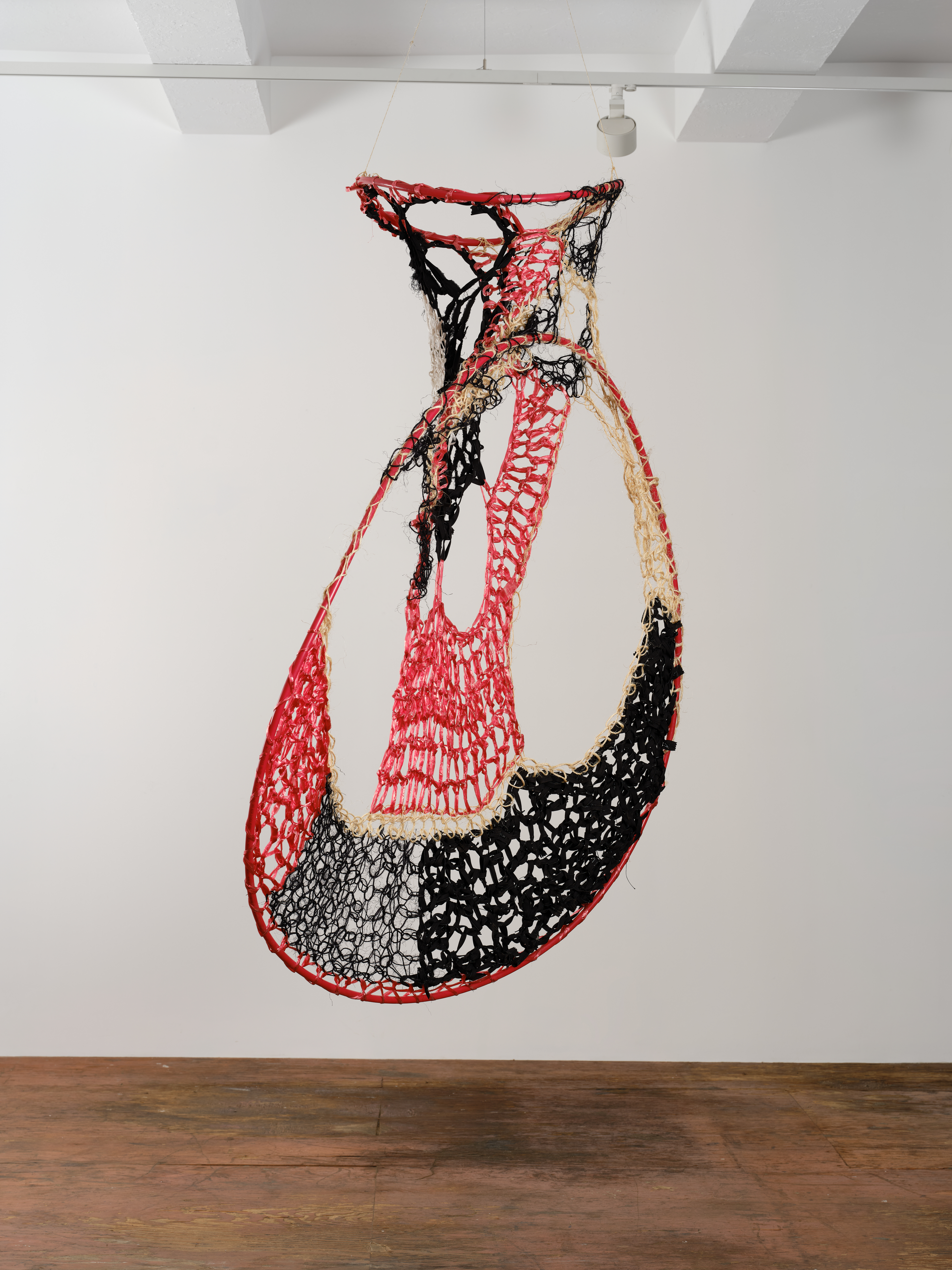
Sinus, 2026. Sisal, zippers, fabric dye, nylon, plastic, rayon, brass connector, pex tubing, 76 x 56 x 24 in; 193 x 142.2 x 61 cm
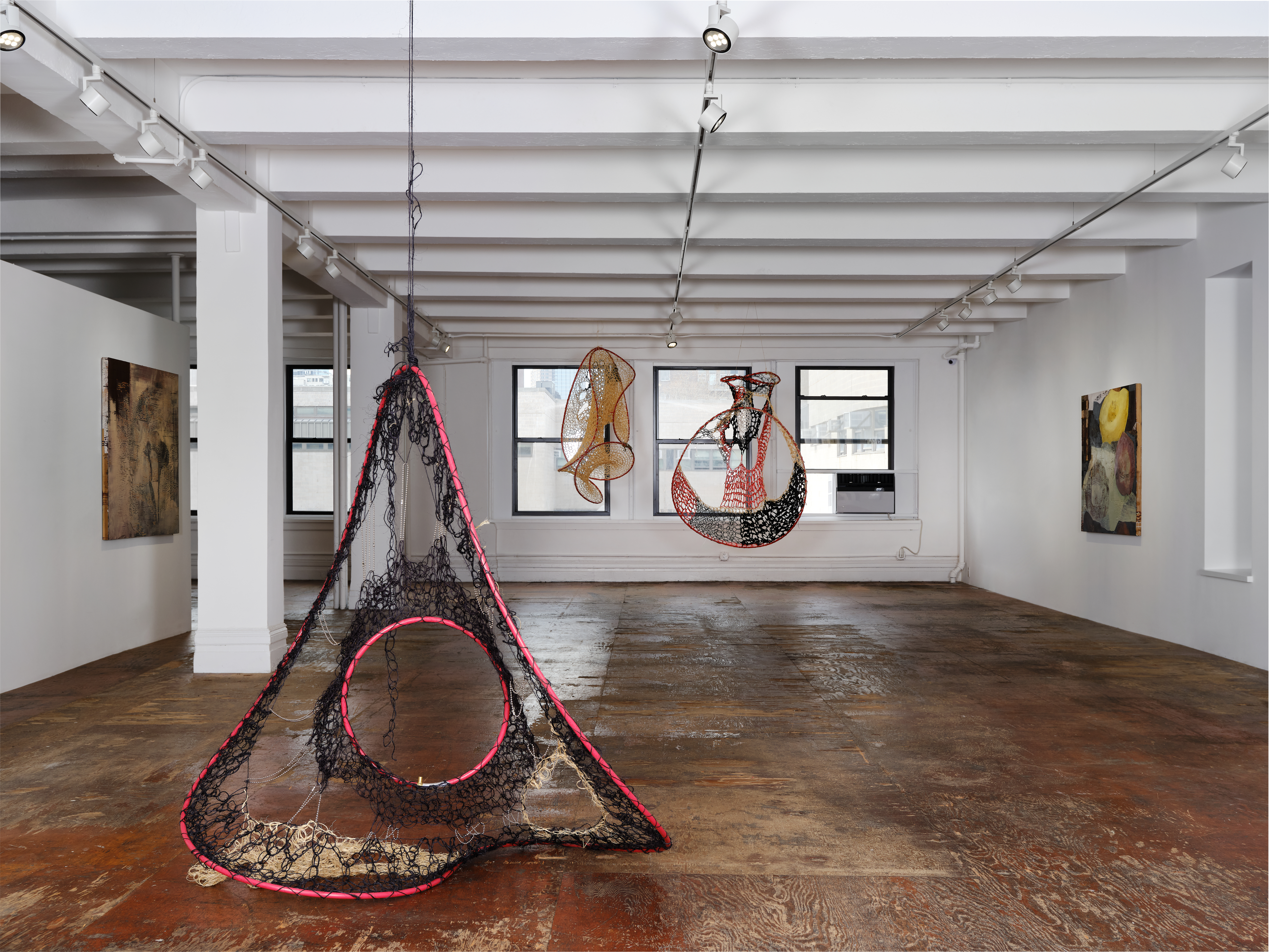
Installation view
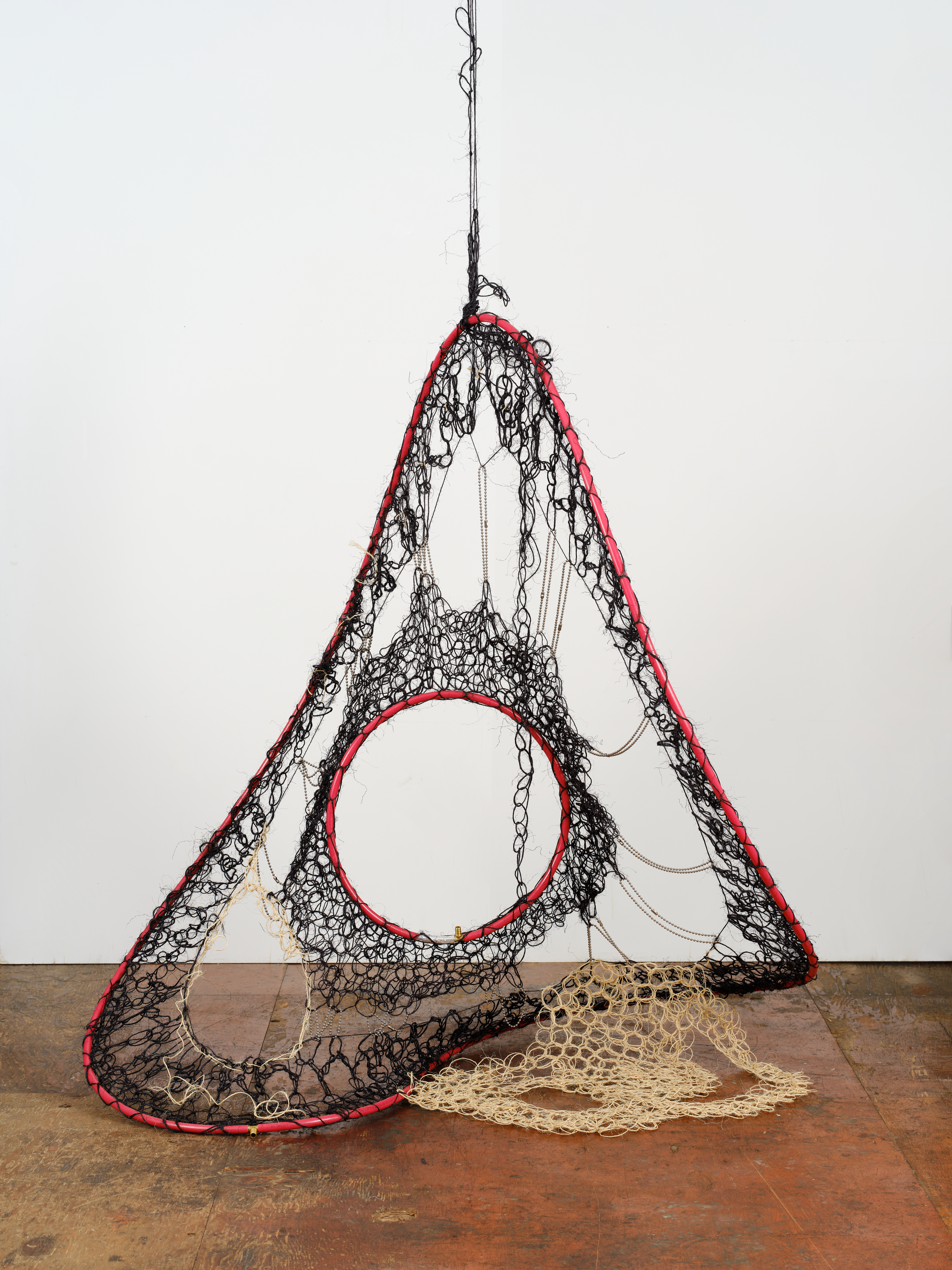
Hester, 2026. Sisal, fabric dye, hospital curtain beads, brass connector, pex tubing, 60 x 54 x 26 in; 152.4 x 137.2 x 66 cm
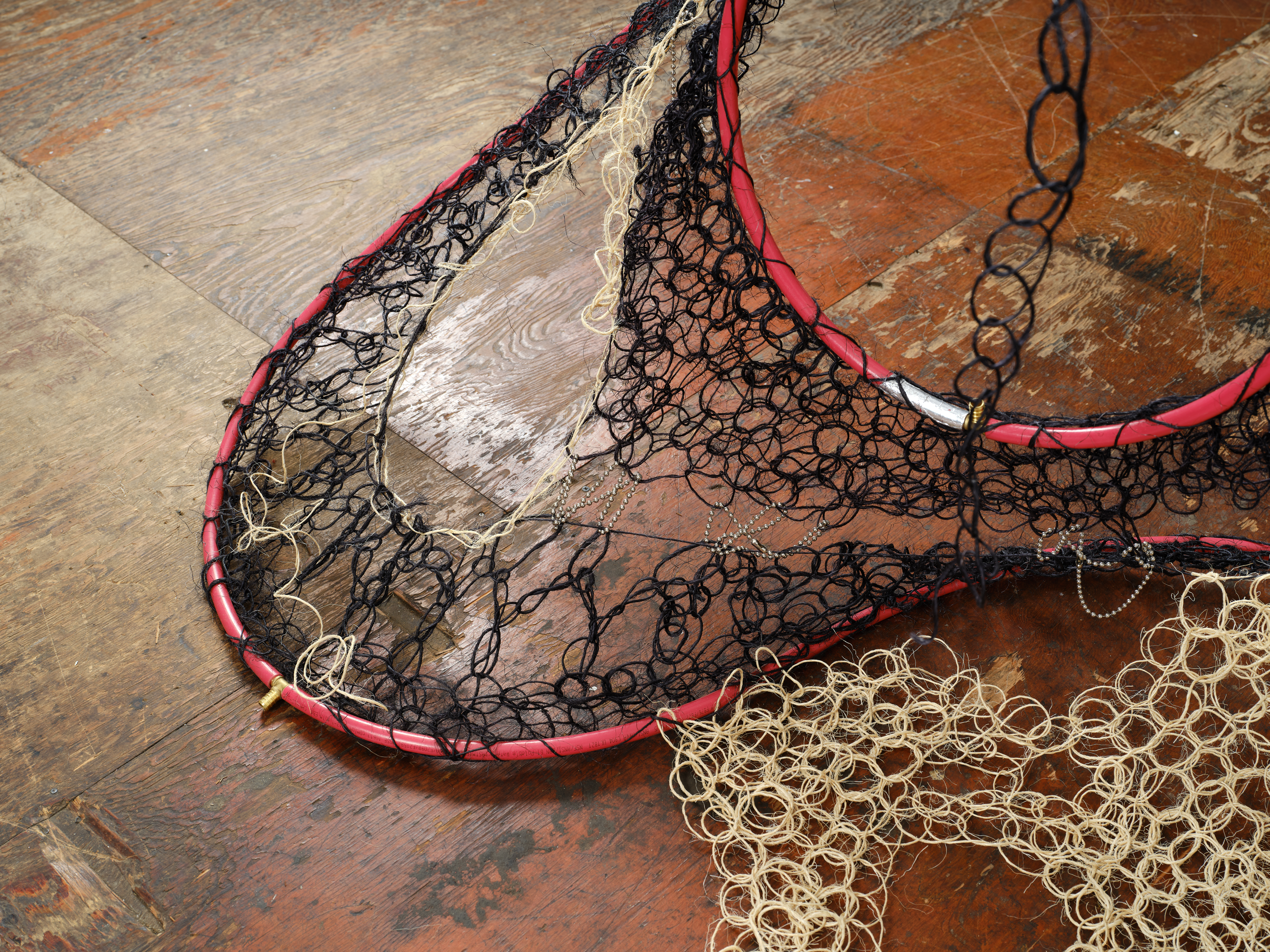
(Details) Hester, 2026. Sisal, fabric dye, hospital curtain beads, brass connector, pex tubing, 60 x 54 x 26 in; 152.4 x 137.2 x 66 cm
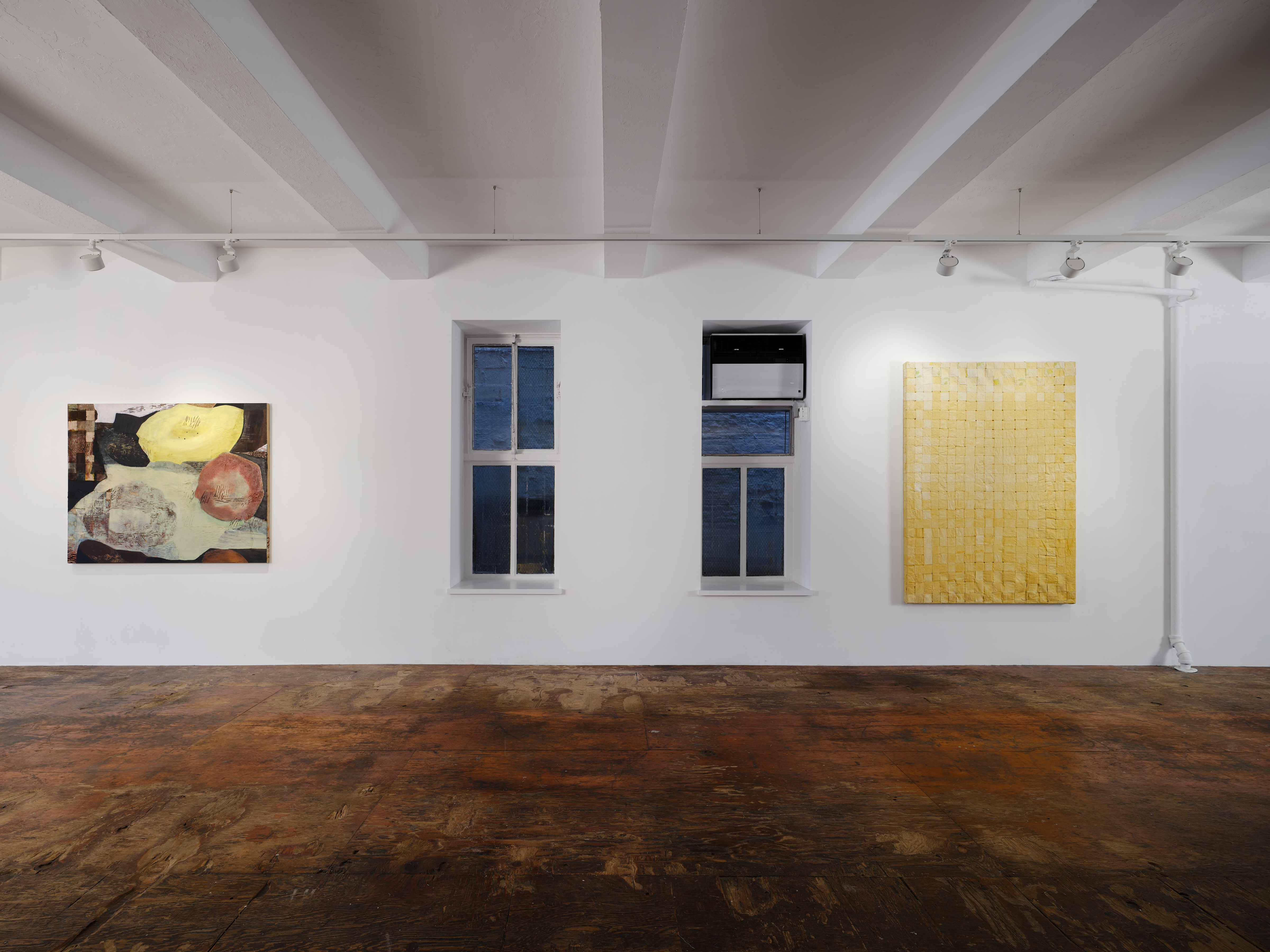
Installation view
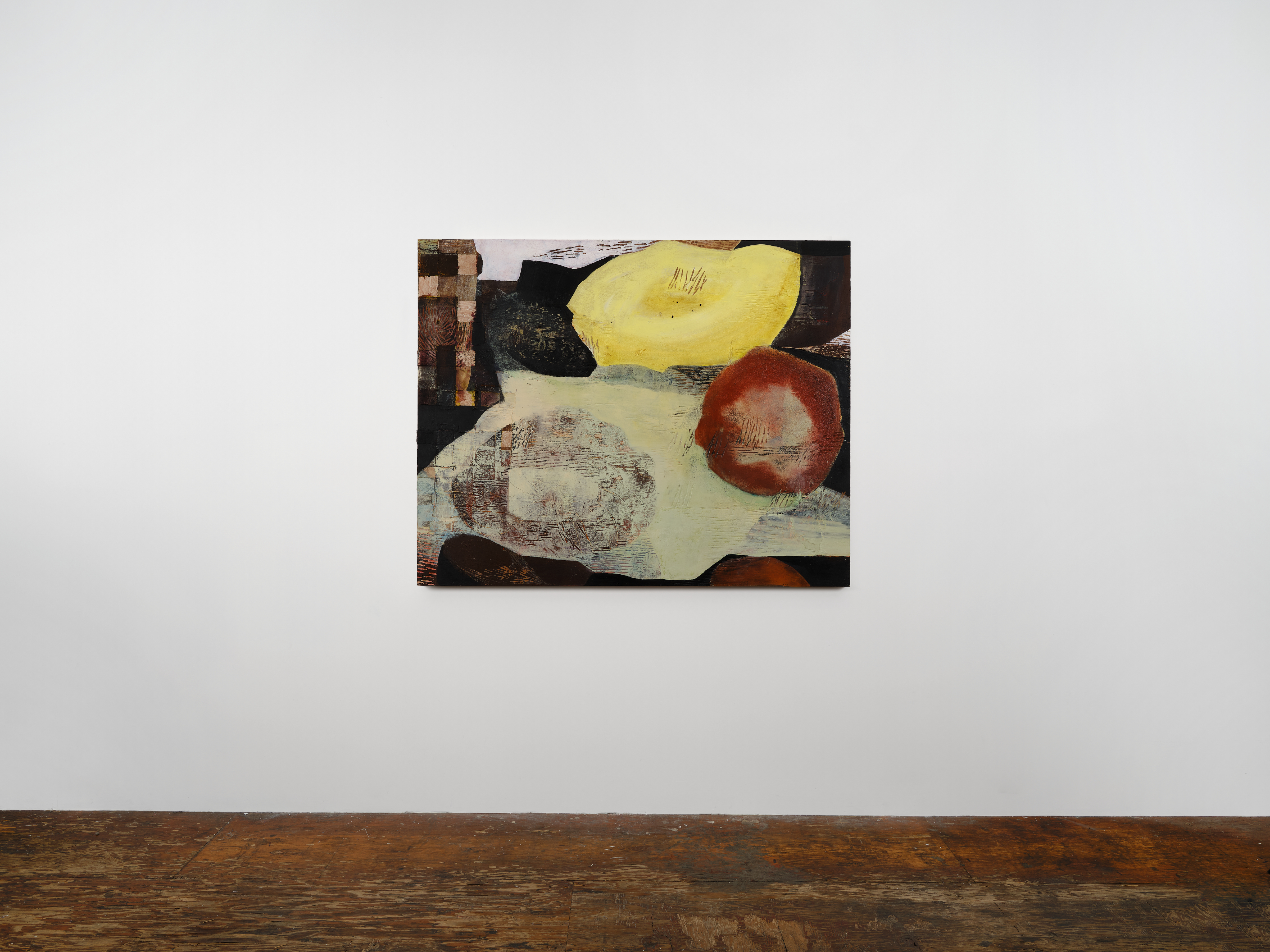
Khôra, 2026. Pigment, fabric dye, marble dust, acrylic, and rayon on carved mahogany, 121.9 x 152.4 cm; 48 x 60 in
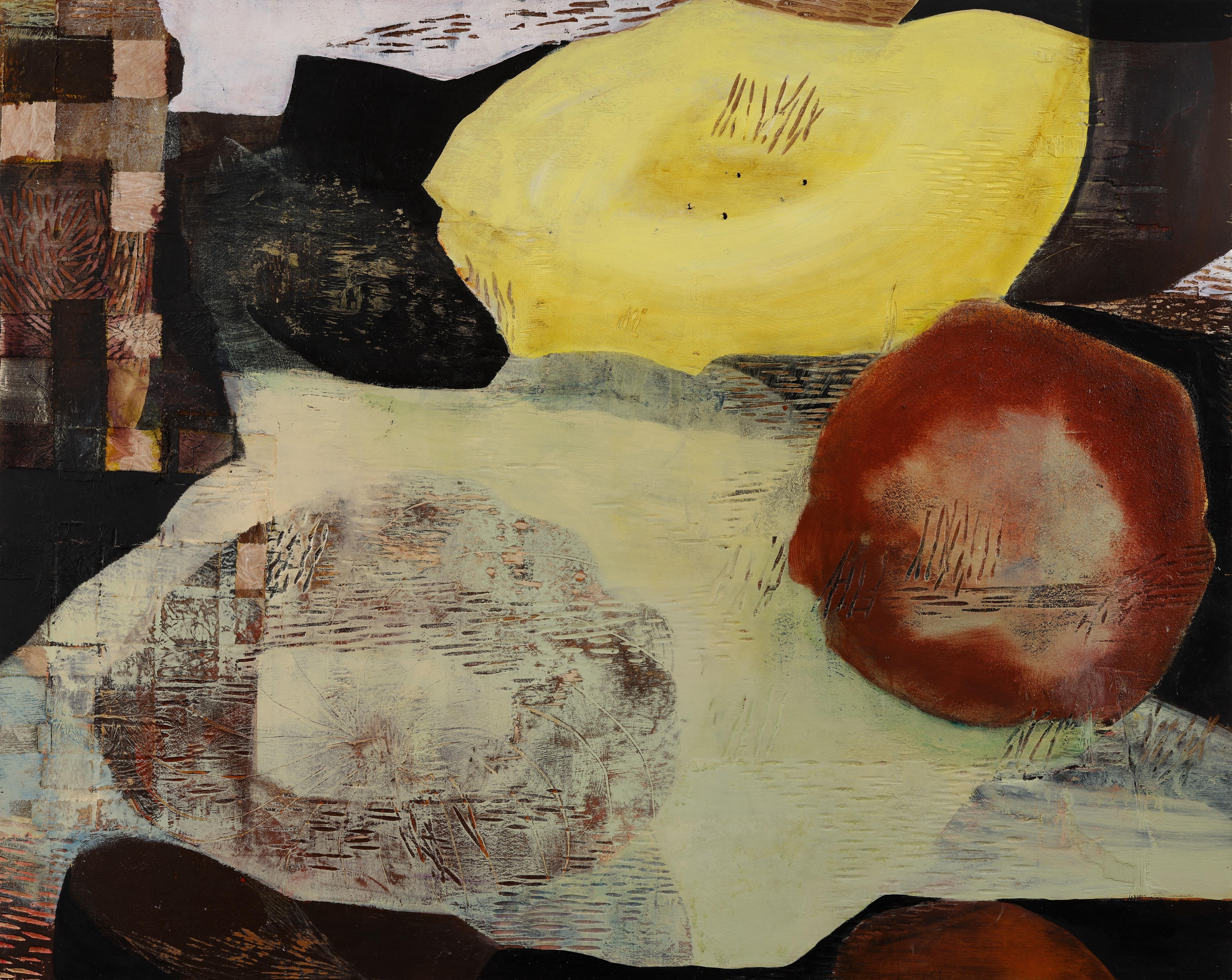
(Details) Khôra, 2026. Pigment, fabric dye, marble dust, acrylic, and rayon on carved mahogany, 121.9 x 152.4 cm; 48 x 60 in
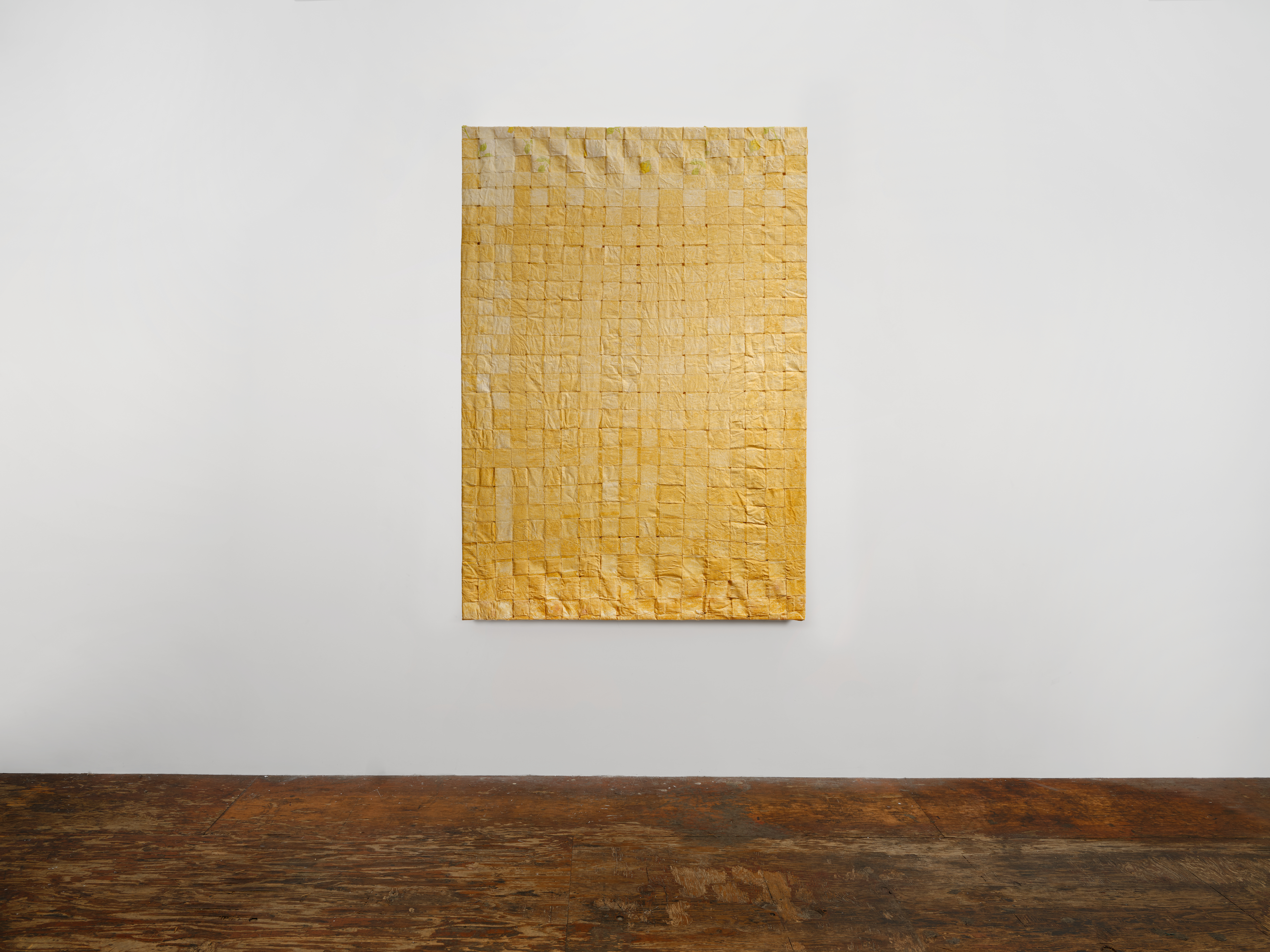
Lar Doce Lar (Home Sweet Home), 2025. Pigment, bedsheets, adhesive compound, 72 x 50 in; 182.9 x 127 cm
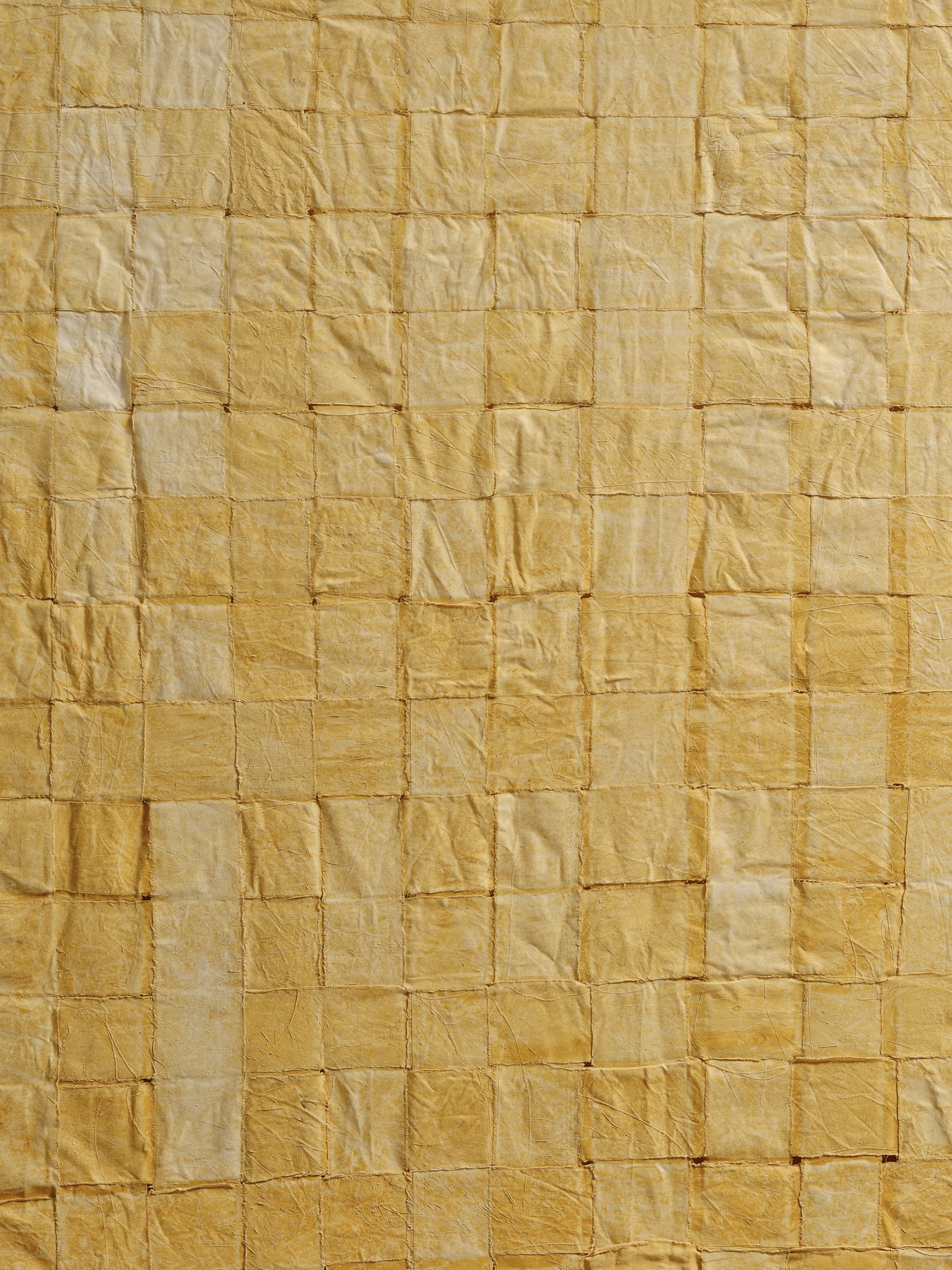
(Details) Lar Doce Lar (Home Sweet Home), 2025. Pigment, bedsheets, adhesive compound, 72 x 50 in; 182.9 x 127 cm
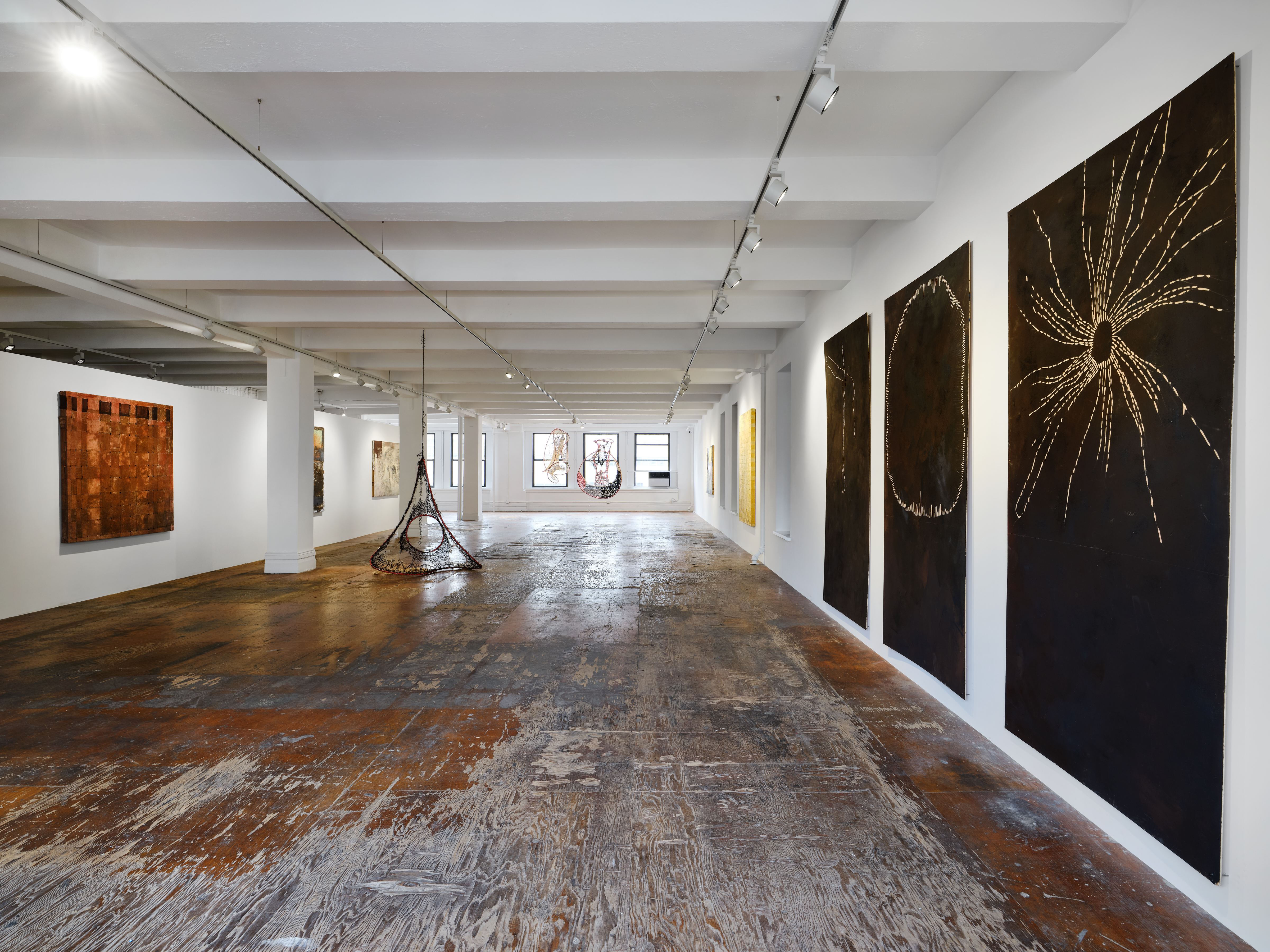
Installation view
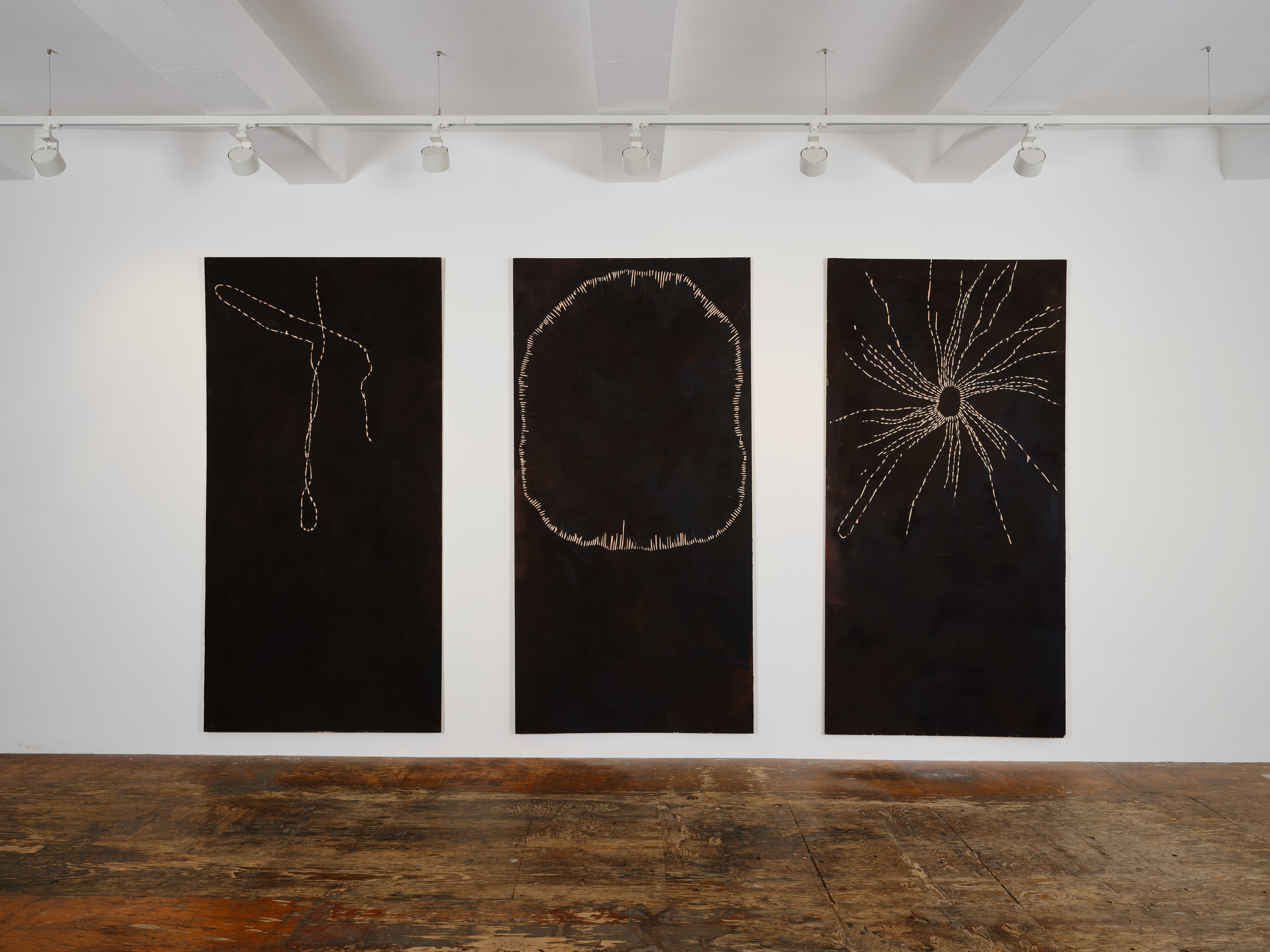
Installation view
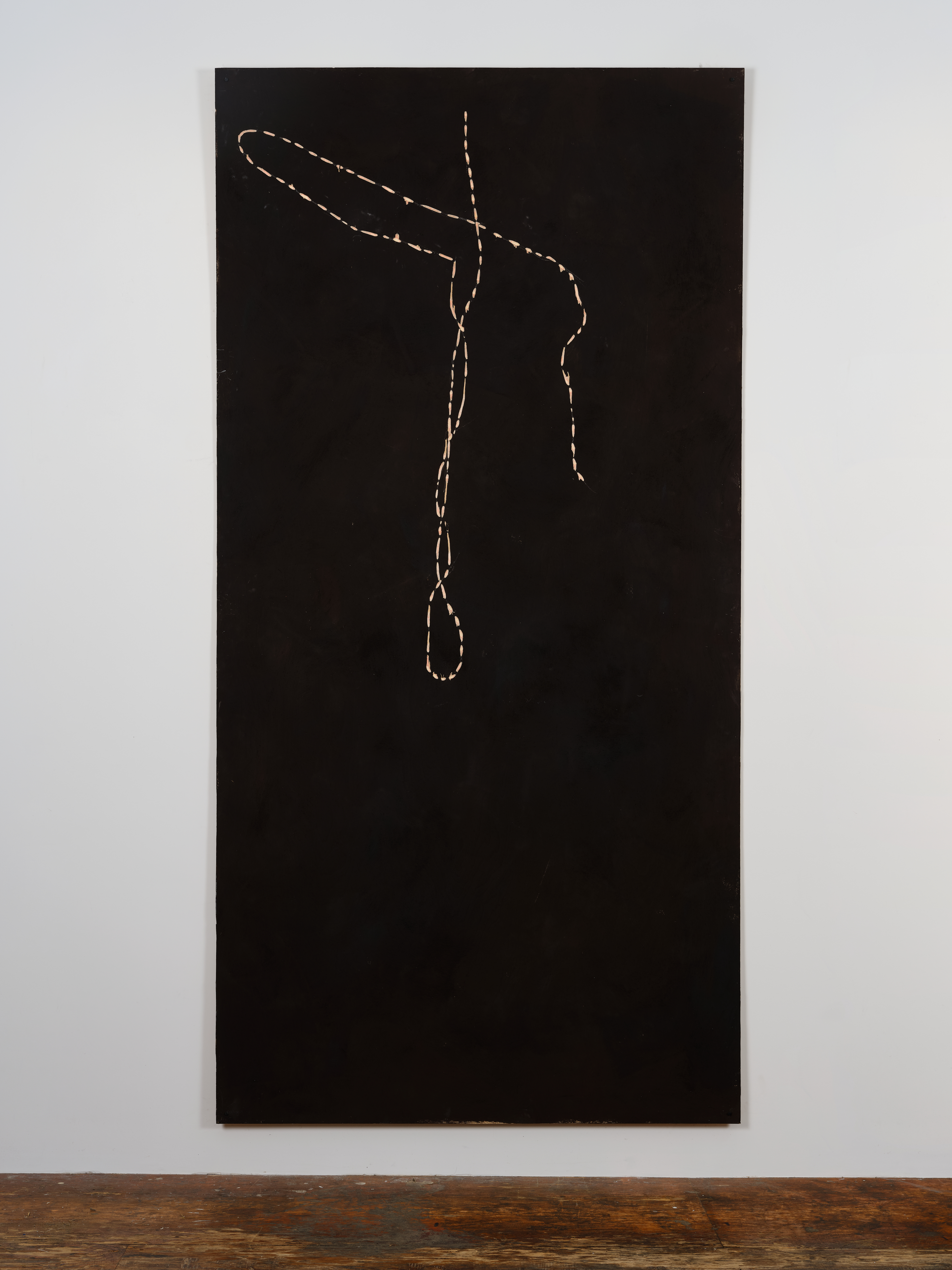
Around, 2026. Tempera, marble dust on carved birch, 96 x 48 in; 243.8 x 121.9 cm
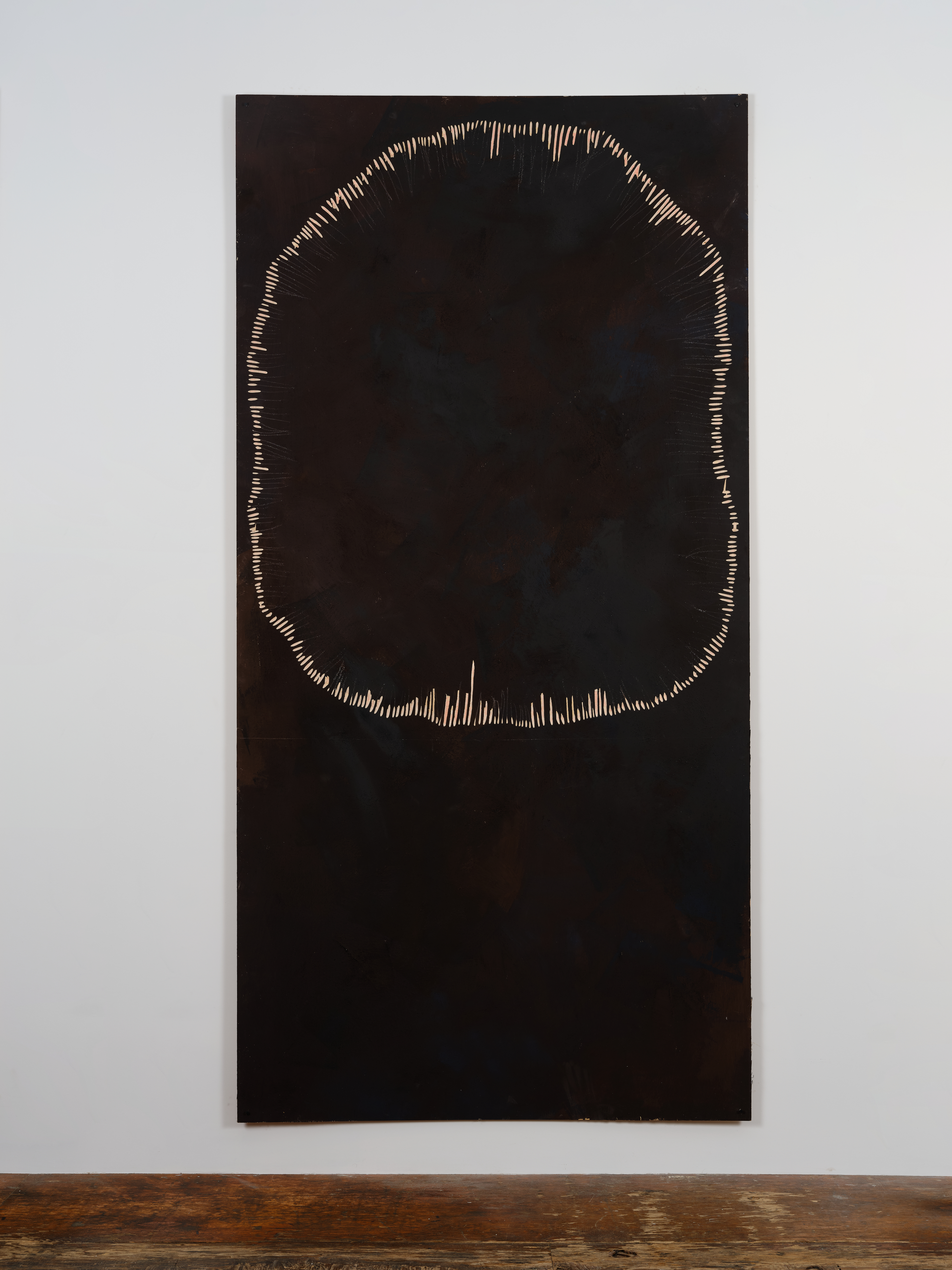
In, 2026. Tempera, marble dust on carved birch, 96 x 48 in; 243.8 x 121.9 cm
Installation view
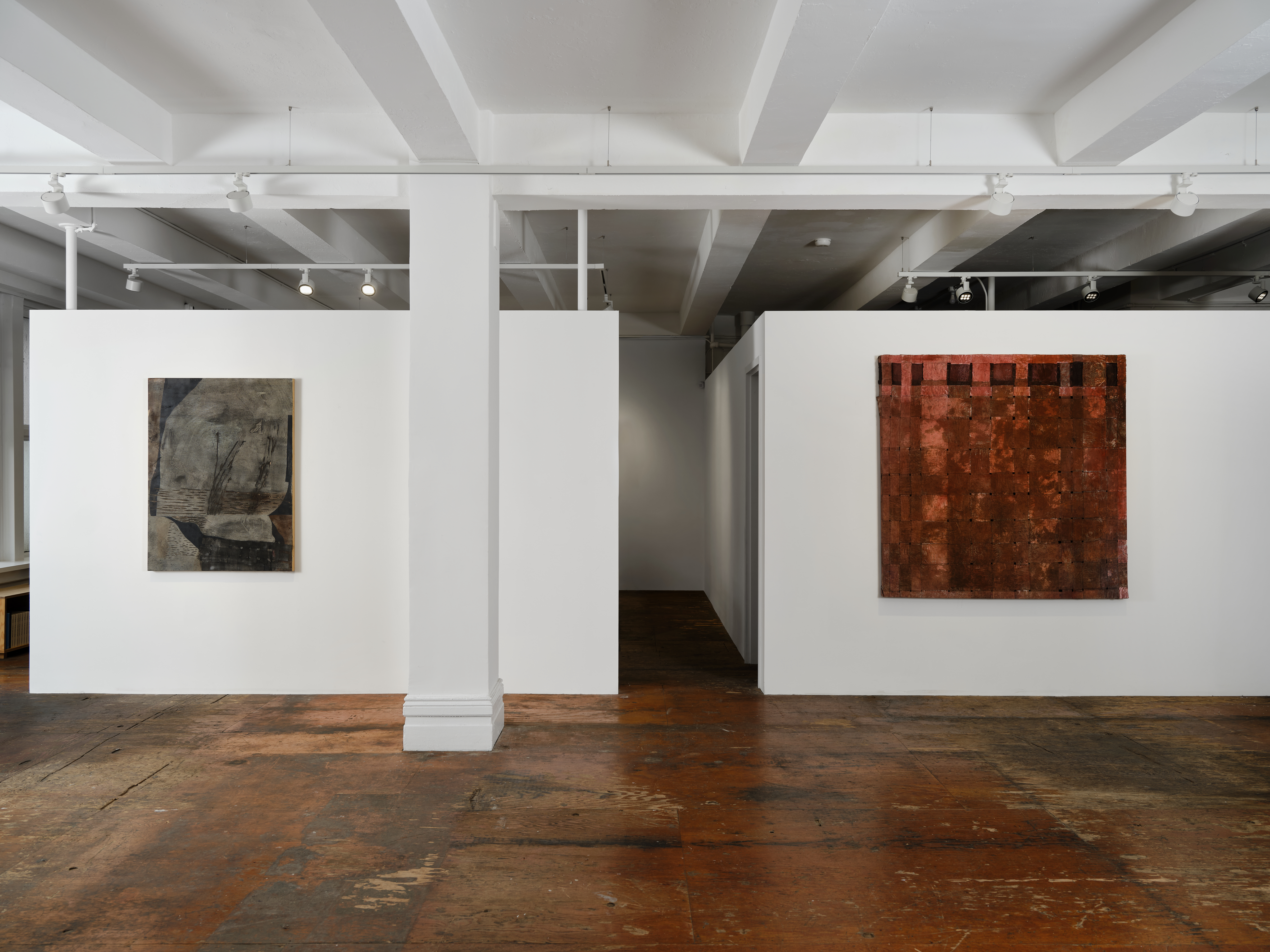
Installation view
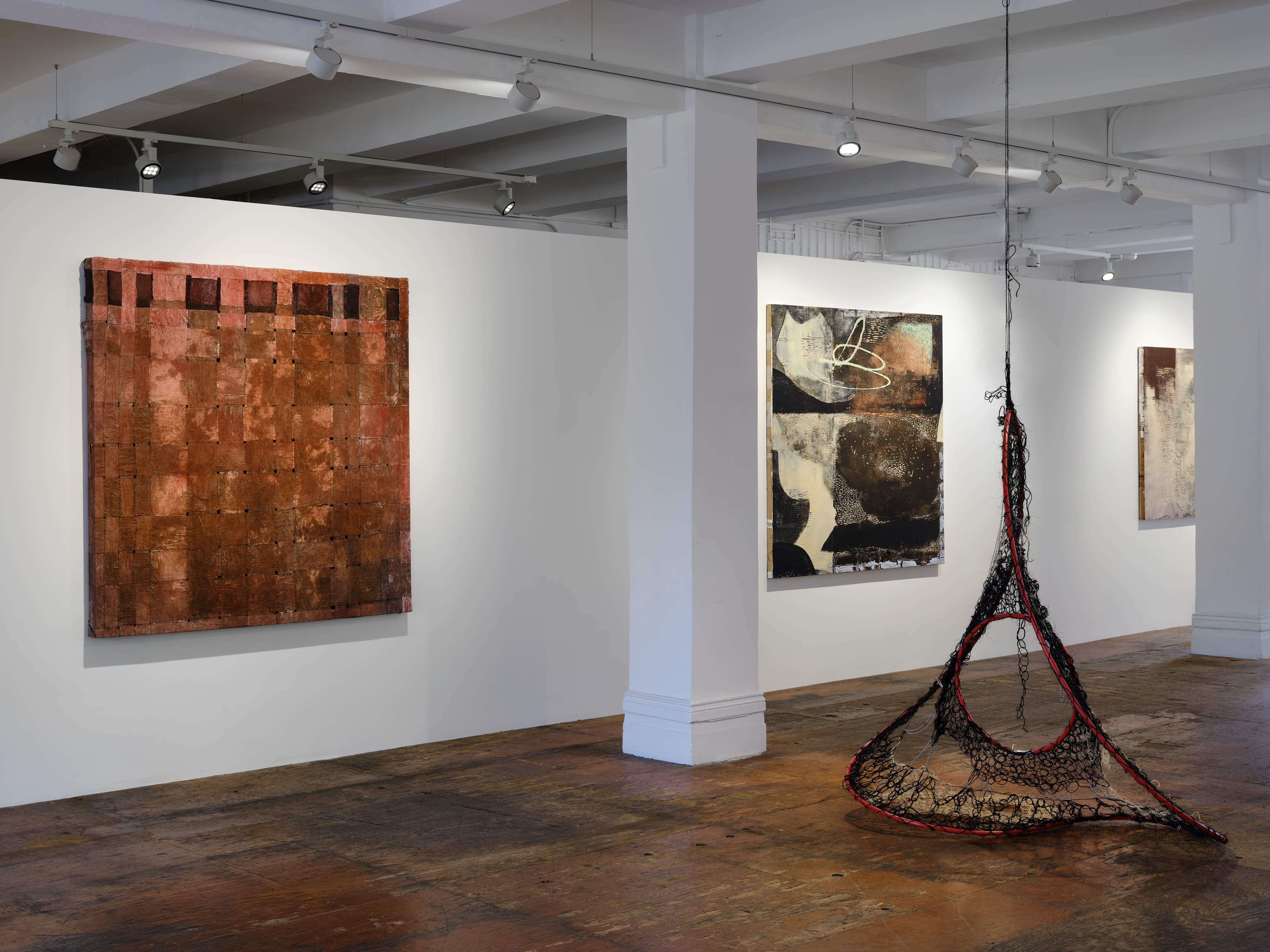
Installation view
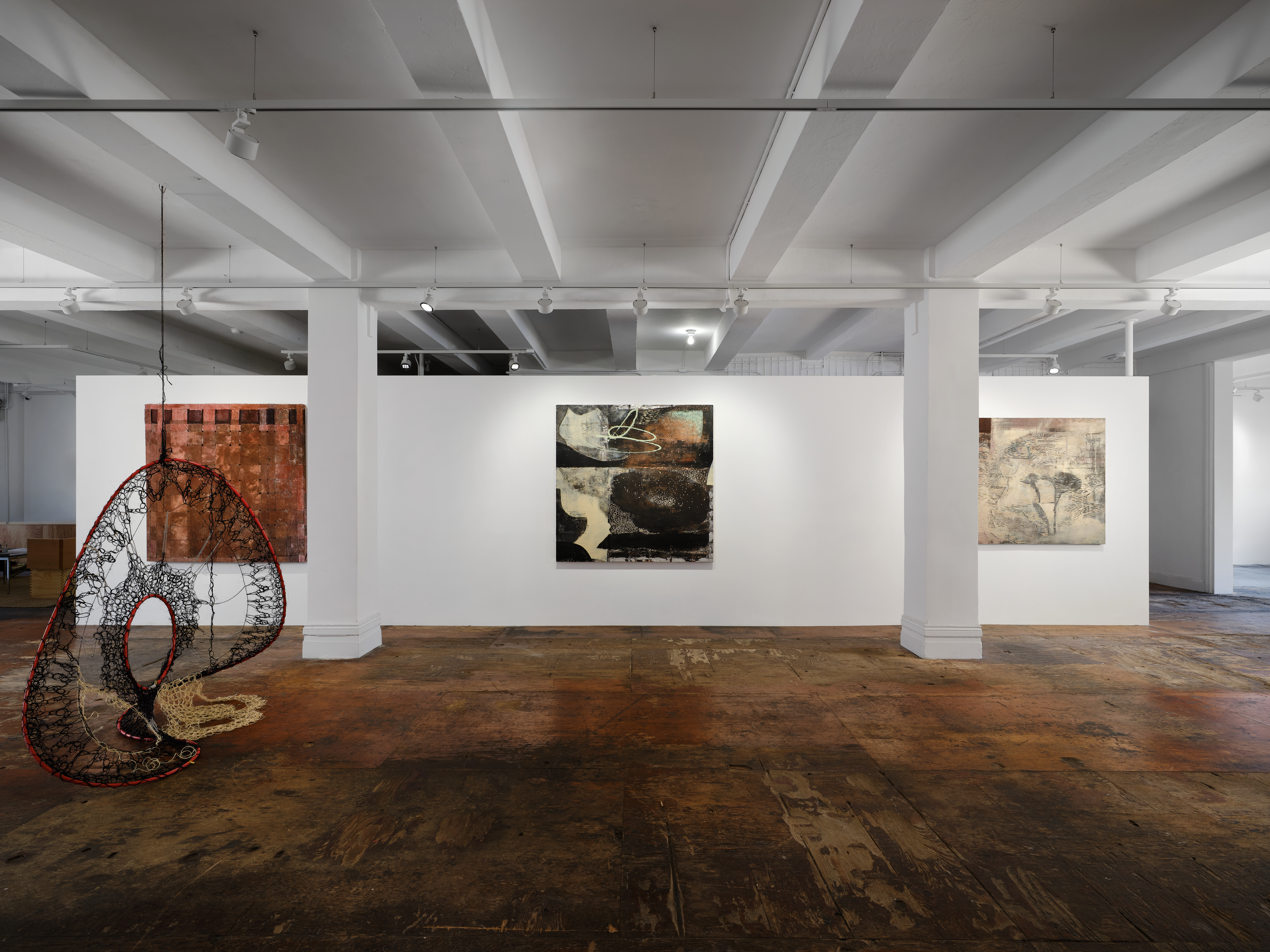
Installation view