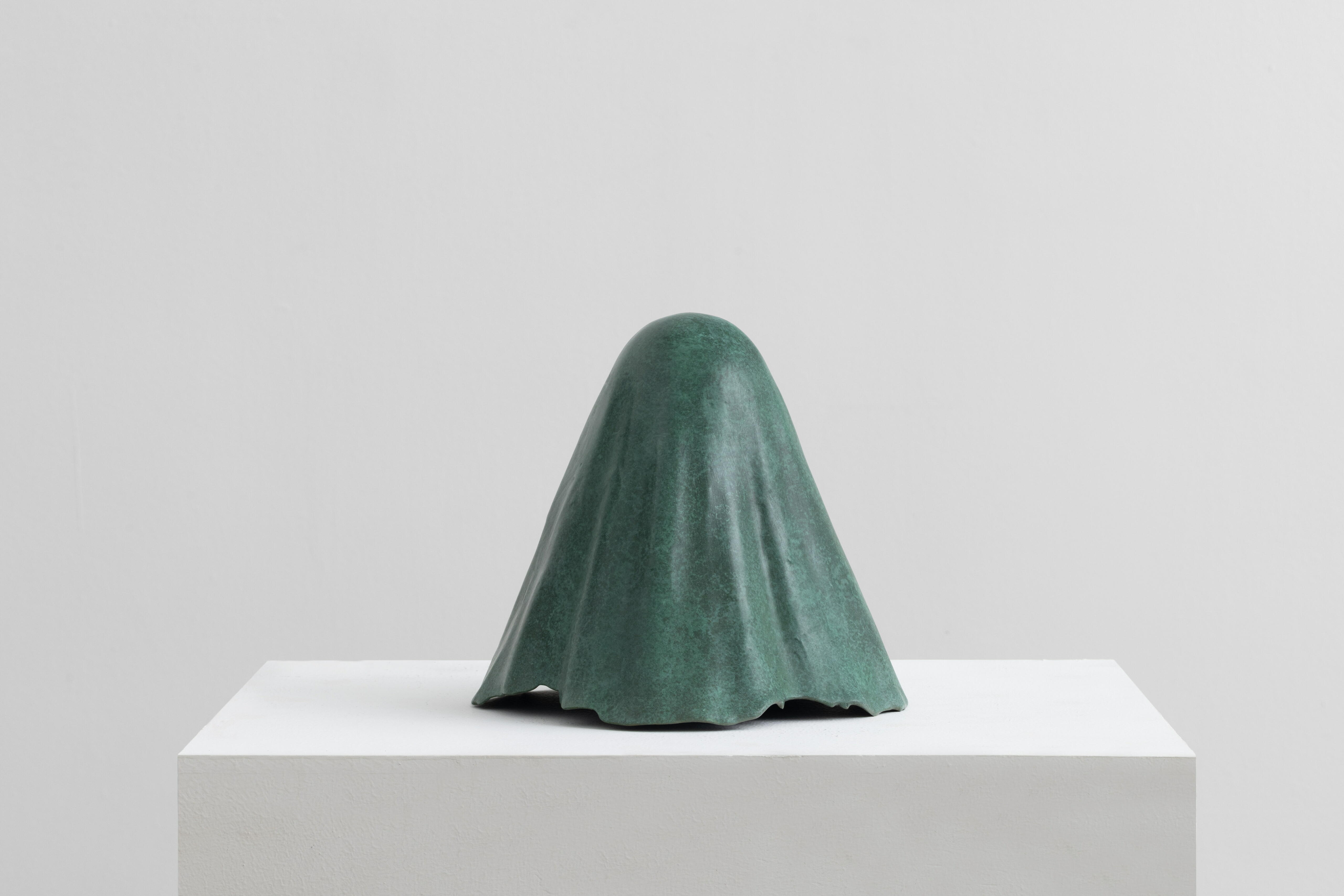
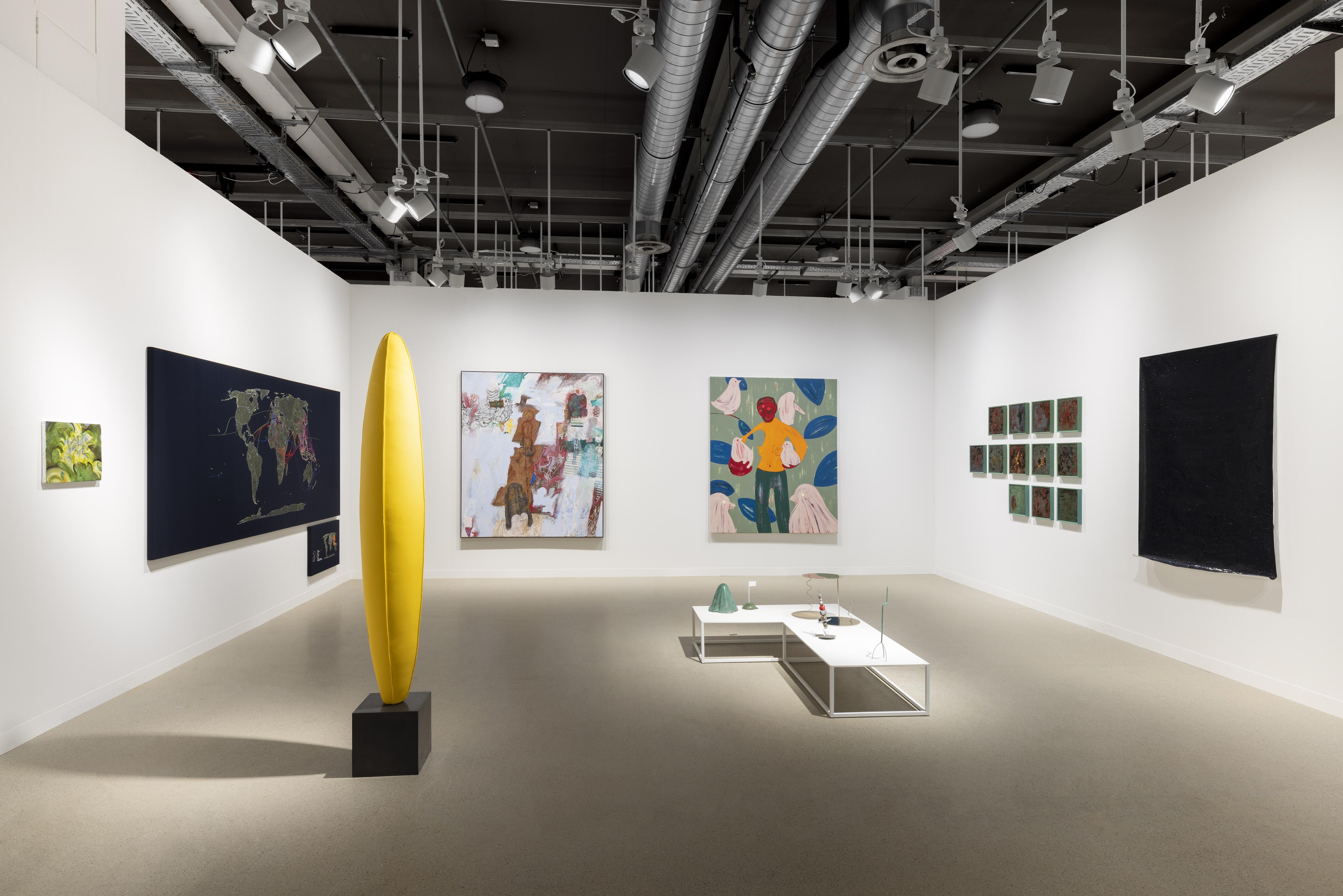
Kiang Malingue is pleased to present at Art Basel in Basel a selection of recent paintings, drawings, and sculptures by Chang Ya Chin, Cho Yong-Ik, Tiffany Chung, Henry Curchod, Shirley Kaneda, Miao Ying, Nabuqi, Thảo Nguyên Phan, Trương Công Tùng, Nicola Tyson, Kaifan Wang, Carrie Yamaoka, Hiroka Yamashita and Yuan Yuan.
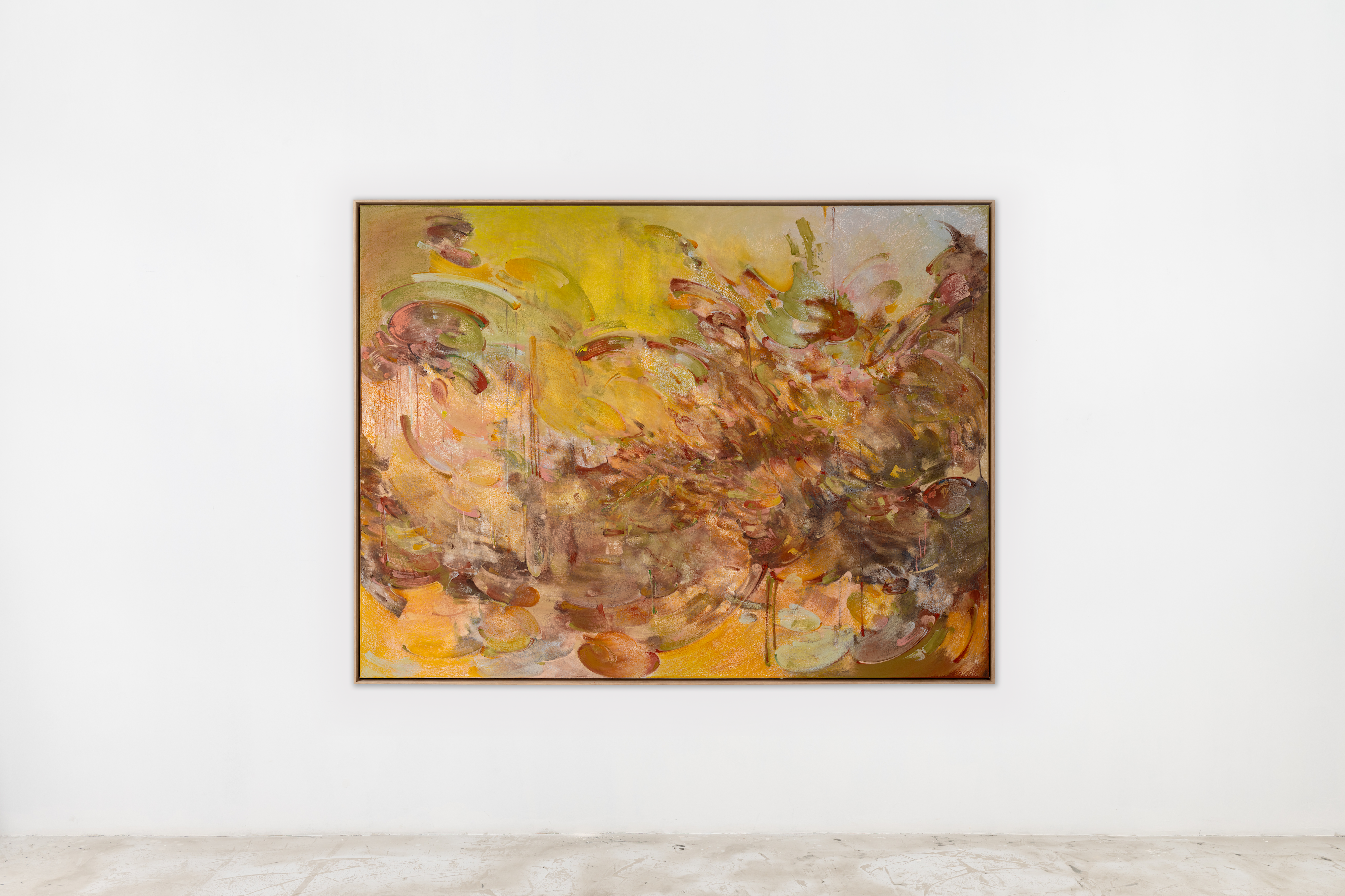
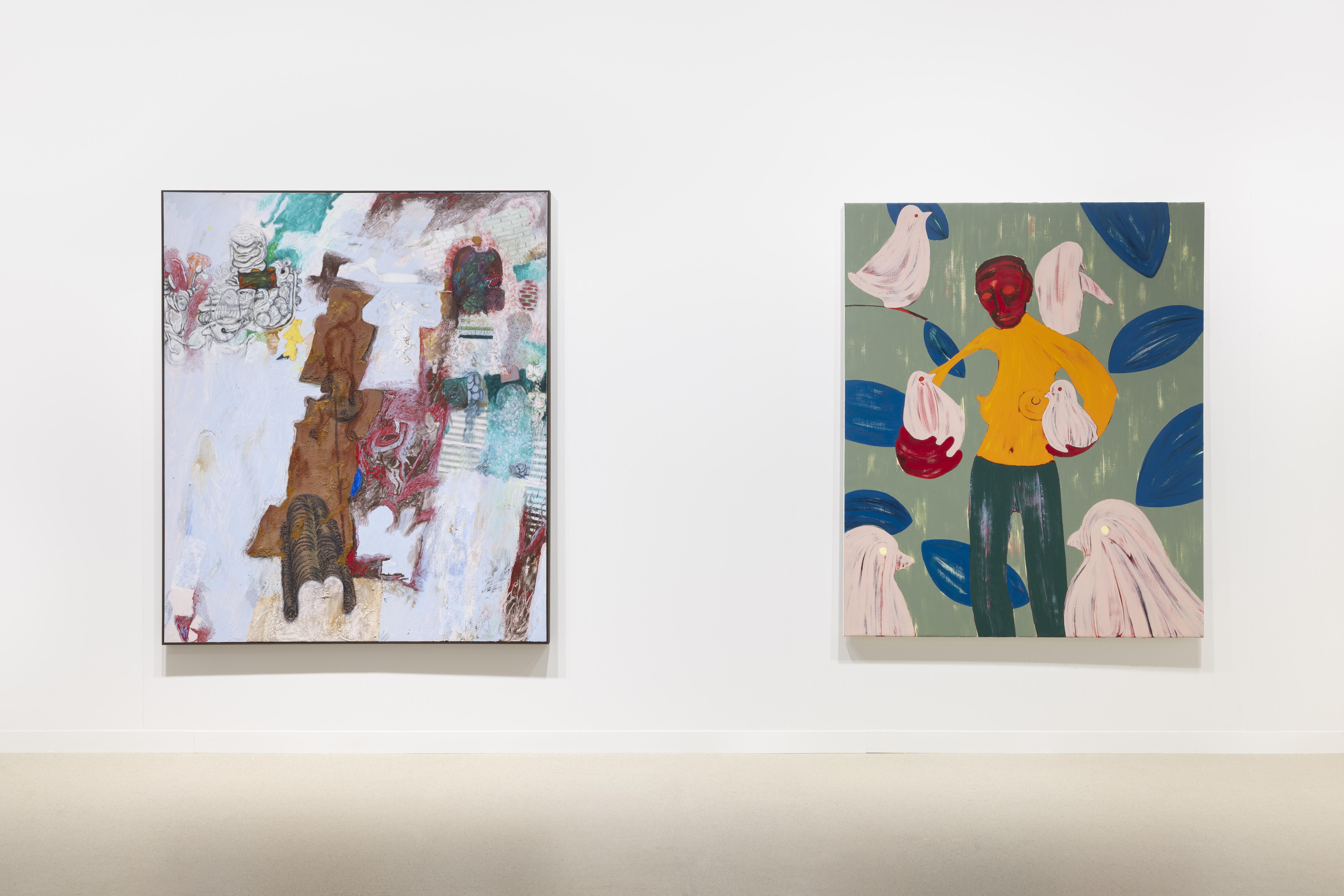
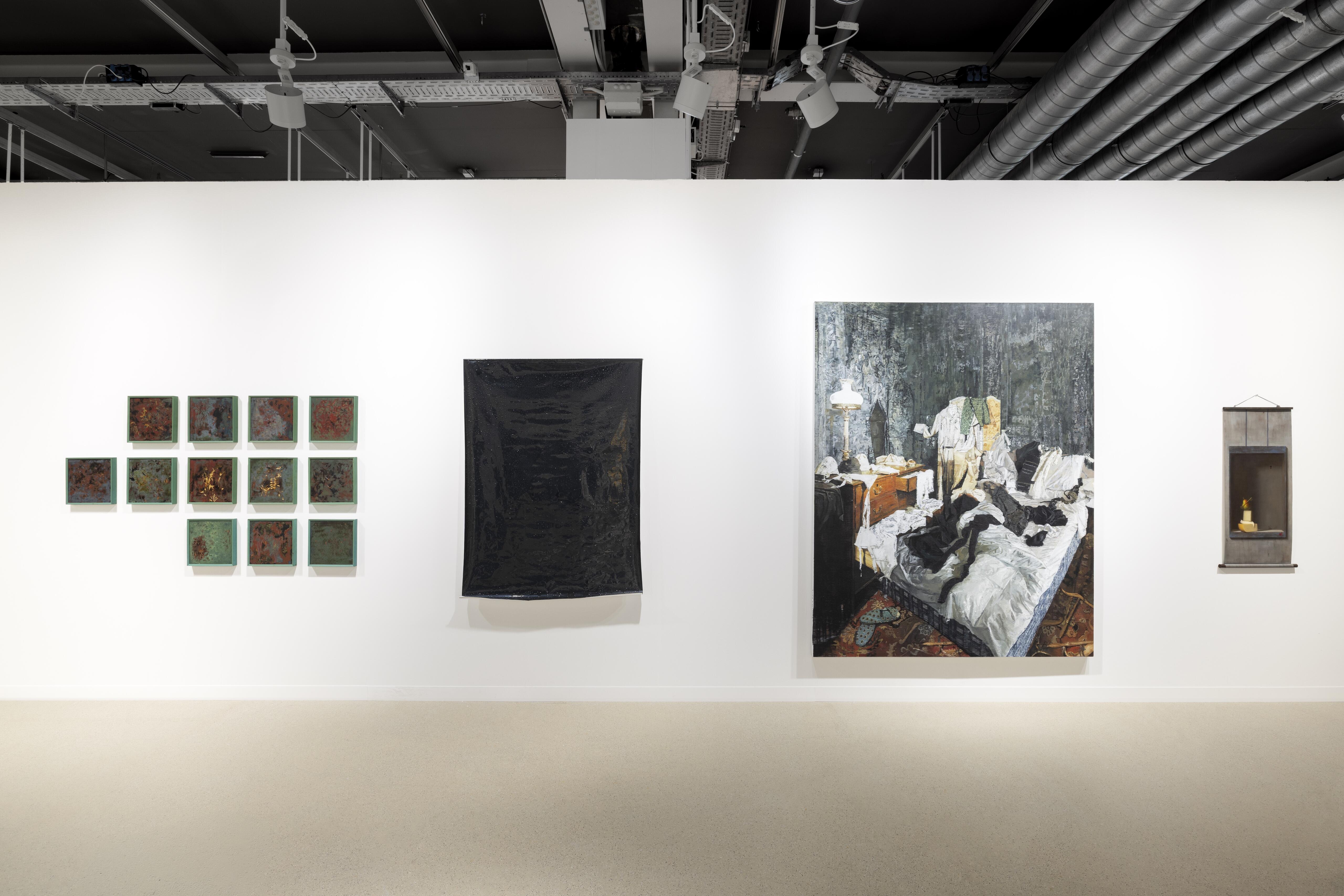
Henry Curchod’s new body of work takes as reference points Édouard Glissant’s seminal work Poetics of Relation, his exhibition “Rome is No Longer in Rome” in Los Angeles in 2025, along with his paintings on old Iranian rugs. His recent paintings emphasise memory and rhizomatic multitude as something to be celebrated, rather than reduced or obfuscated: “celebrating spontaneity and trace rather than hiding my process.” Curchod’s process involves drawing memories onto a blank canvas only to erase them with thick gouache, repeating the cycle until only the essence of the memory remains. This method mirrors the inherent infidelity of human memory, prioritising the affective essence of a moment over its literal depiction.
A central highlight is the inclusion of three sets from Trương Công Tùng’s ongoing series “As time passes through shadows…” These lacquer-on-terracotta pieces utilise a rigorous process of layering and sanding. By partially revealing concealed strokes and natural forms, Trương creates a spectral quality where images fluctuate between visibility and disappearance. As the artist notes, these works serve as “a gateway to dream realms,” seeking connections between the human, the natural, and the invisible.
Complementing this exploration of the unseen, Thảo Nguyên Phan’s “Forêt, Femme, Folie” series of watercolours takes its title from the 1978 work of European anthropologist Jacques Dournes. Phan’s series serves as a critical response to colonial knowledge and ethnography. By contesting the perceived authority of the photographic lens—infusing new narratives that question the ways in which ethnographic narratives are constructed, and the possibilities of proposing sensitive rewritings, superimposing viewpoints, eras and beliefs—she offers the narratives and memories of Jarai culture a place within the fluidity of time, suggesting alternative perspectives to commemorate local communities. In her own words, the project is a “tribute to peoples, animals, plants and spirits.”
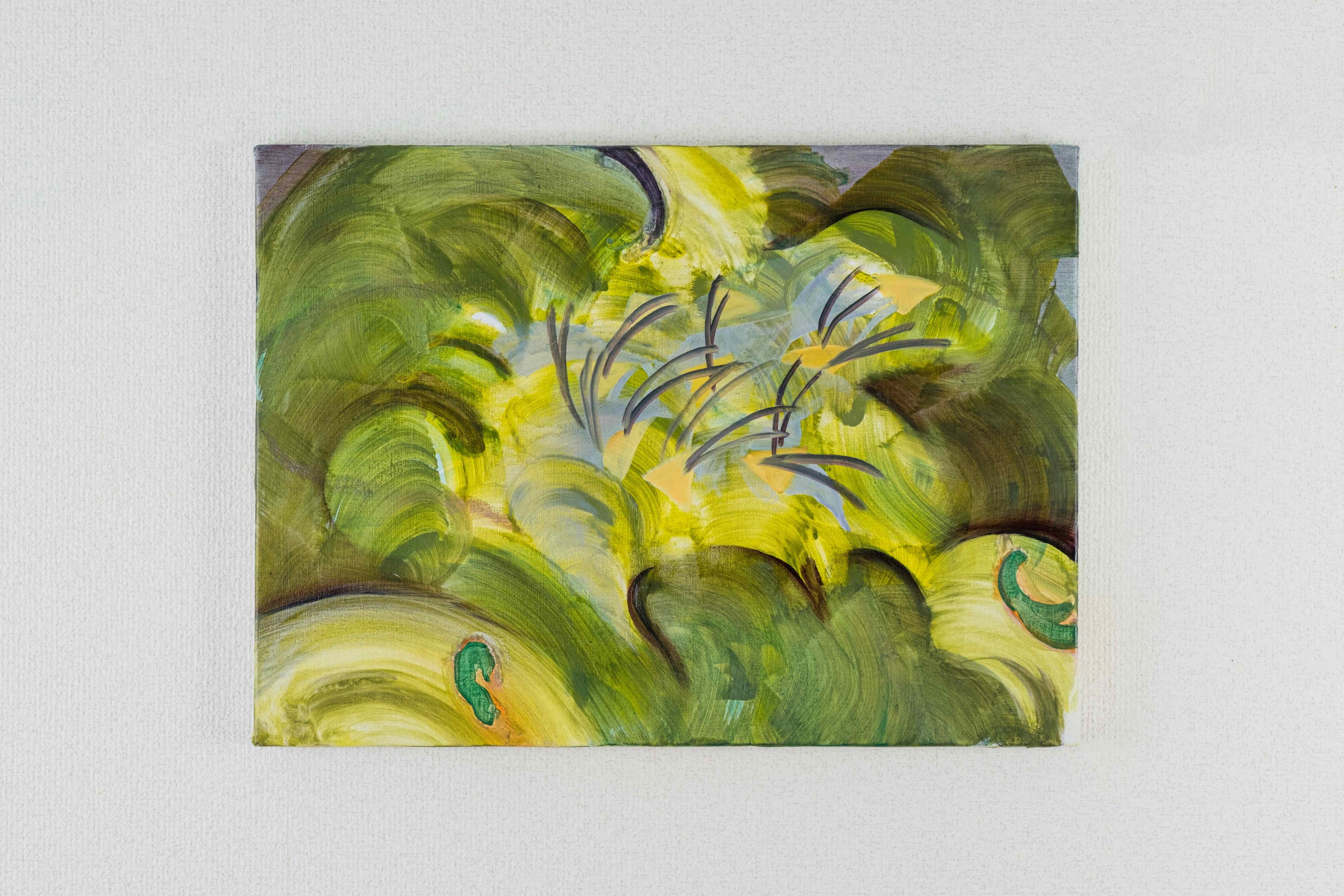
New paintings by Hiroka Yamashita crystallise the artist’s preoccupation with uncanny landscapes, lingering dreams and spiritual entities. Recent works such as The Fin and the Ceder (2026) investigate awe-inspiring events tied to specific Japanese locales—the sighting of a mysterious, elegant aquatic creature, for example—using them as vessels to explore the distortion of memory and the amplitude of the (super)natural world. Works such as Canola Flowers (2026), on the other hand, shift the gaze toward the subtle, flickering tensions of the everyday. Kaifan Wang’s new painting Breast-sorrel and pinks of love, fingers that wind around tighter than vines (2026) takes its title from Walt Whitman’s Leaves of Grass. The painting continues Wang’s ongoing exploration of how images emerge within abstract painting—through wiping, pressing, and linear gestures, Wang translates physical imprints into a sensual abstraction where shapes reflect shifting relations of desire, identity, and environment.
Shirley Kaneda’s two paintings on view demonstrate the ever-deepening development of her painting practice in the last decade. Confident Apprehension (2013) destabilises the uniformity of the image through interchangeable spaces and a “simulated” brushstroke informed by Roy Lichtenstein’s work. Her more recent Serene Turmoil (2025) utilizes vertical bands and circular motifs to create a harmonious co-existence of contradictions, suggesting that meaning in non-representational painting is found in the act of perception itself. In Six Canaries (2026), Nicola Tyson adopts a looser approach, painting directly onto the canvas with a deliberate, unpremeditated nonchalance and humour that registers both her confidence with the medium and a deep existential unease about the contemporary context for the human figure, its representation and its troubled relationship to its environment. Just as complex and abstract, Miao Ying’s Training Landscapes No. 29 – A sparkle, a flourish, the topic is spun. And suddenly, we’re talking about…the sun? (2025) is part of a series also featured in the artist’s Parcours presentation. In this work, Miao orchestrates a sequence of AI systems to generate both the glitch-laden, digitised compositions and their whimsical, poetic titles. She then weaponises these initial outputs as raw material, subjecting them to a nested process of secondary AI interpretation and manual painterly execution. Through this hyper-mediated workflow, Miao explores the contemporary mechanics of training, questioning whether individual development remains a viable or worthwhile pursuit in an era of algorithmic saturation.
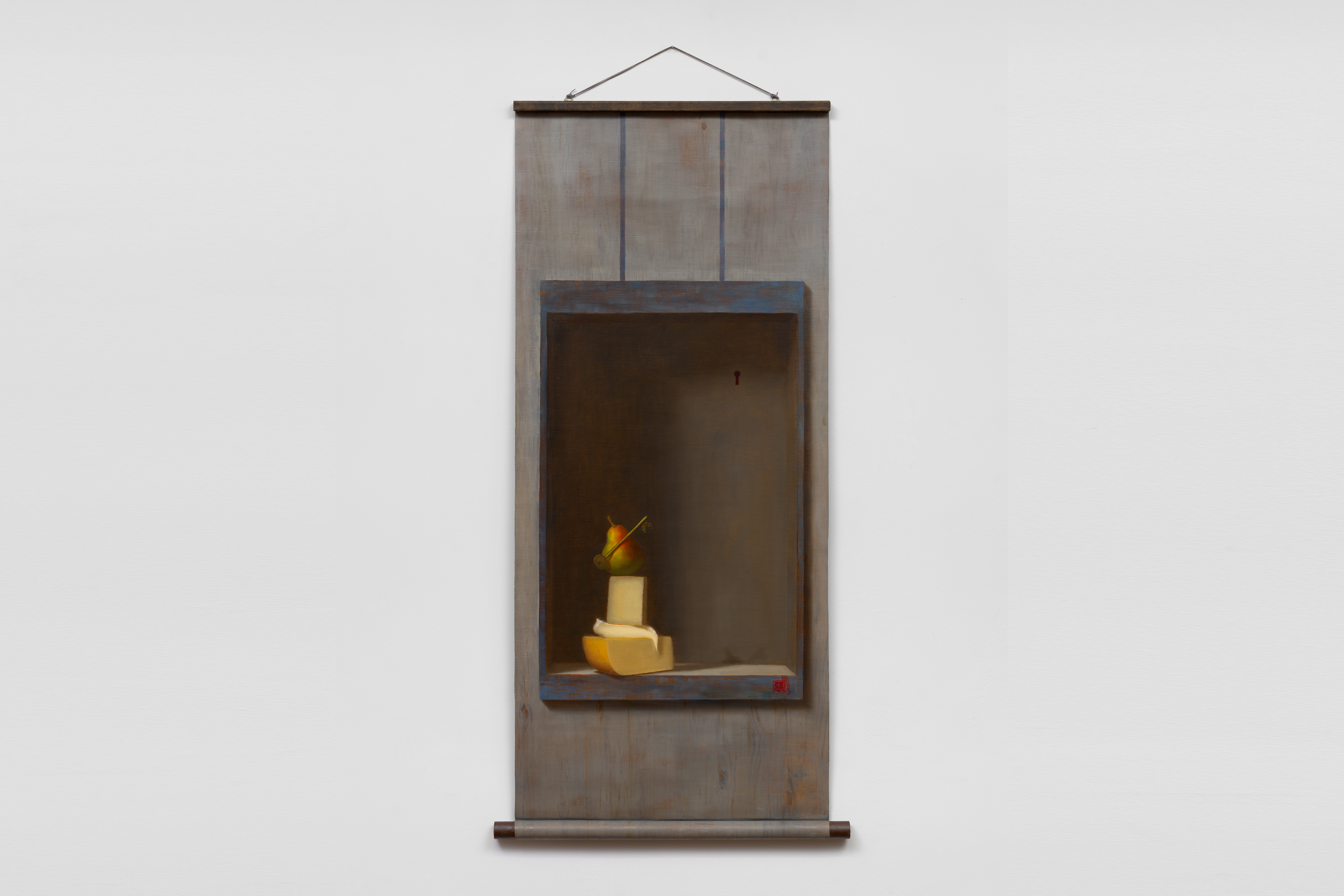
Chang Ya Chin continues to refine a world where non-human protagonists perform epic acts, while arranging improbable still lifes—such as a slender orchid planted in blue cheese—only to mount this new body of work within traditional Chinese scrolls. This formal choice of adding external/internal frames for recent paintings such as Key Holding (2026) is anchored by the childhood memory of unrolling and hanging traditional Chinese scrolls with her father, a ritual she translates into a physical framing device that invokes a potent mise en abyme. By simultaneously honouring the scroll’s architecture and rupturing the pictorial plane, she subverts the conventions of contemporary ink painting, negotiating the dialogue between the void of empty space and the density of the painted surface.
Also on view is a series of “Toy” sculptures by Nabuqi that subverts the power relations between subject and object. What begins as the solving of bright, cold, and seemingly simple puzzles soon reveals a more complex reality: the toys themselves govern the rules of engagement. Under their influence, a physical environment is rendered precarious; the viewer is transformed into a cautious participant, forced to navigate the maze of scattered trinkets, and to confront the playfully totemic No.2 (Yellow leather sculpture) (2022).
In the Parcours sector, Trương Công Tùng and Miao Ying are presenting two independent projects: Trương’s In The Temporary Forms….It Dies Here and Is Born There… brings together interactive installations, sculptures and a single-channel video in a garden environment. For Trương, a garden is a versatile, permutable and moving site, “a living entity capable of birth, mutation, and rebirth in different contexts and conditions.” In this garden of life forms, Trương makes use of an intricate array of materials—soil, cicadas, fabrics, wood, electrical wires, mainboards, sensors, wax, sap, and silkworm cocoons—alongside ephemeral elements like humidity, time, and space. Experienced as an organic whole, the artworks consider different entryways through which one may venture into the unknown.
Miao Ying’s Mutual Conditioning investigates the reciprocal training processes that govern human cognition and artificial intelligence. Situated within the utilitarian environment of a carpark, the presentation pairs two live simulations with two oil paintings. Operating under datasets rigorously trained and conditioned by the artist, the simulations generate perpetually evolving landscapes composed of generic video-game assets, underscored by AI-voiced poems that traverse themes of technomancy, fantasy politics, and algorithmic ritual. Miao methodically channels the images birthed by these artistic systems into a secondary AI primed for textual interpretation, which are then meticulously translated into oil on canvas by traditionally trained painters. By oscillating between virtual generation and manual execution, Miao stages a loop of production where magic, ideology, and technology converge—revealing the shifting boundaries between human creativity and automated creation.
Ellen Pau’s new video installation, Luminosity (2026), is currently featured in “ON HEALING,” a duo exhibition with Kimsooja curated by Angelika Li at PF25 cultural projects’ Dornach Atelier in Dornach, Switzerland. Continuing the artist’s enduring fascination with light as both an essential biological force and an artistic medium, Luminosity unfolds as a deeply poetic meditation on light, temporality, and transnational consciousness.
Art Basel in Basel 2026 | Booth N10
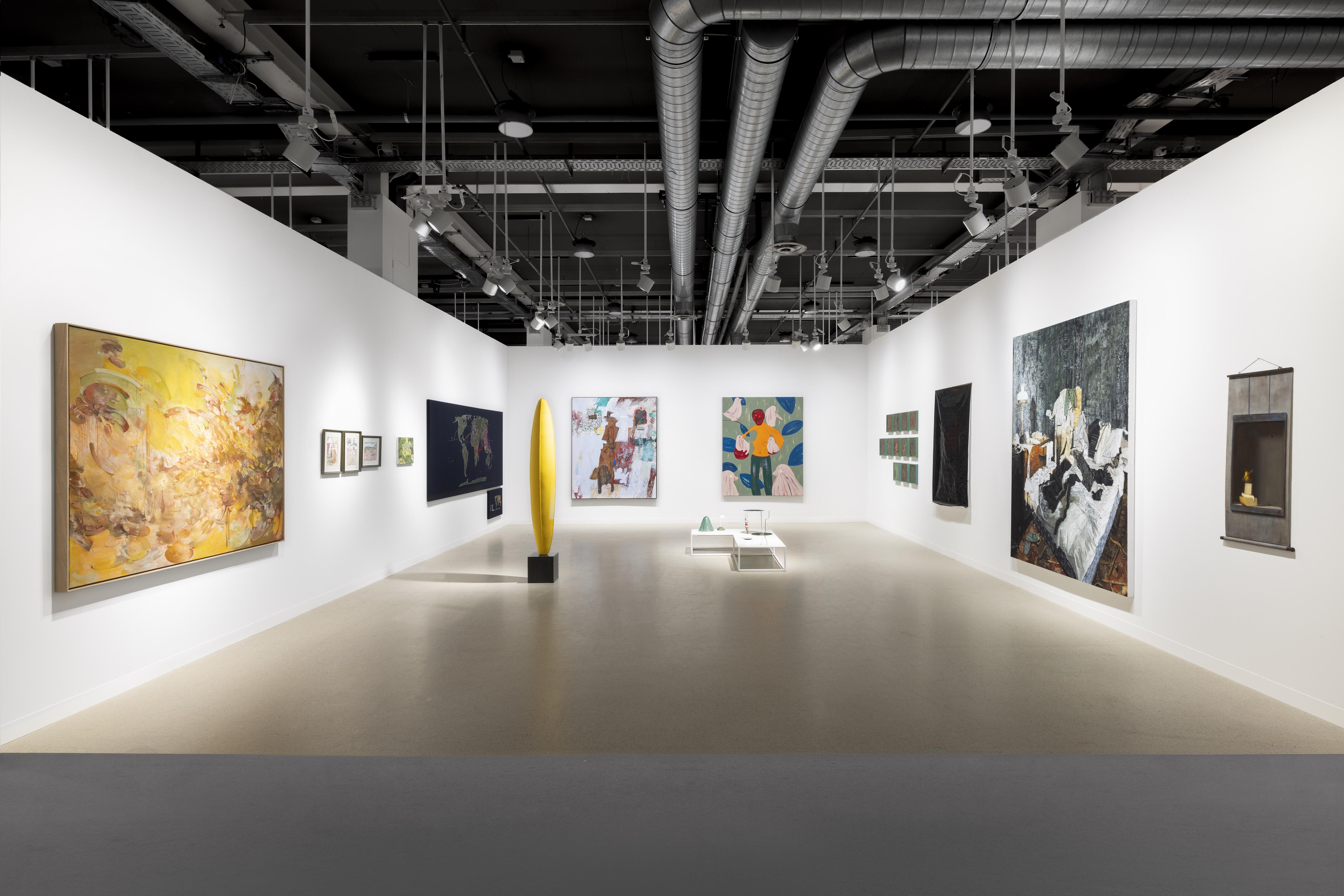
Installation view
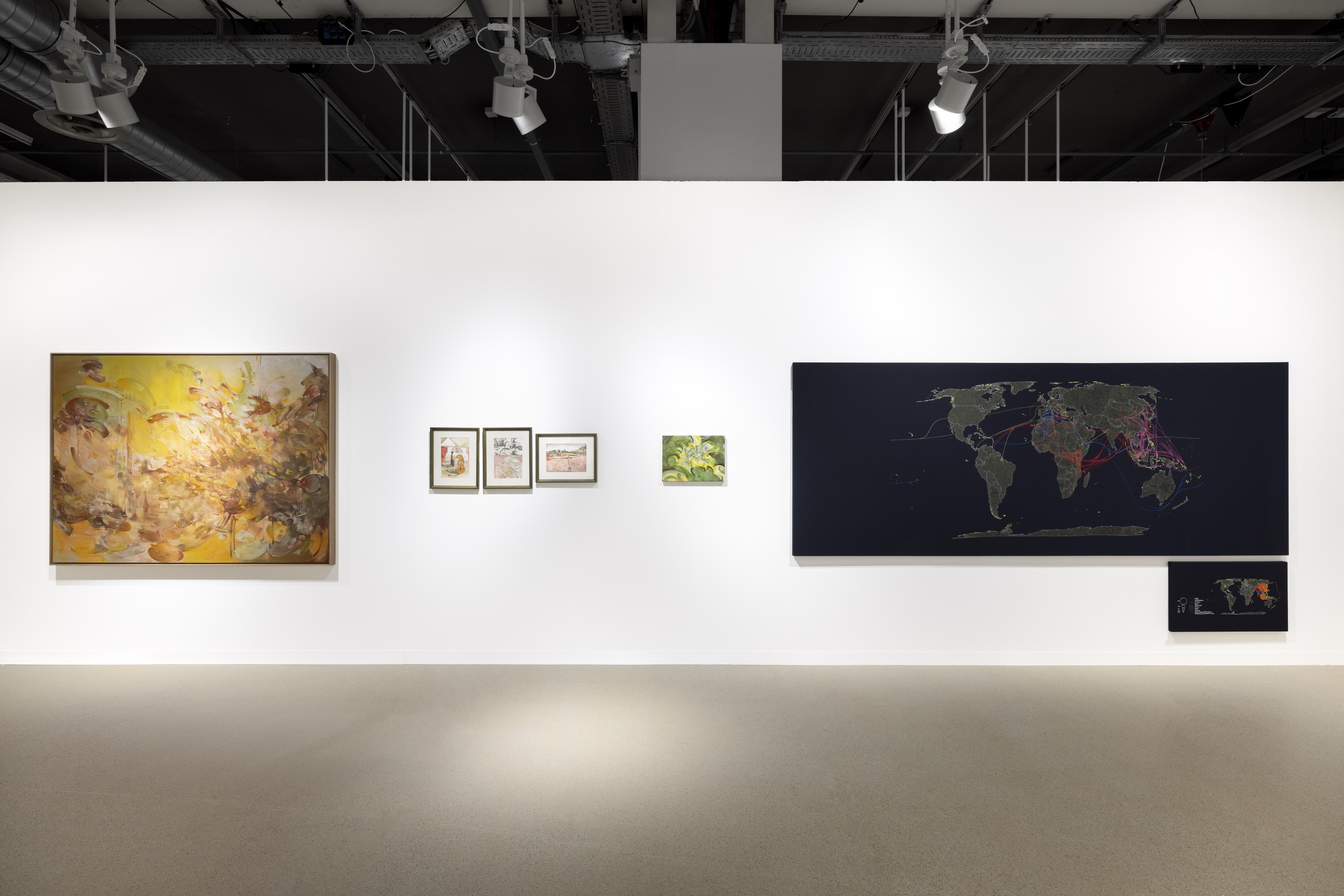
Installation view
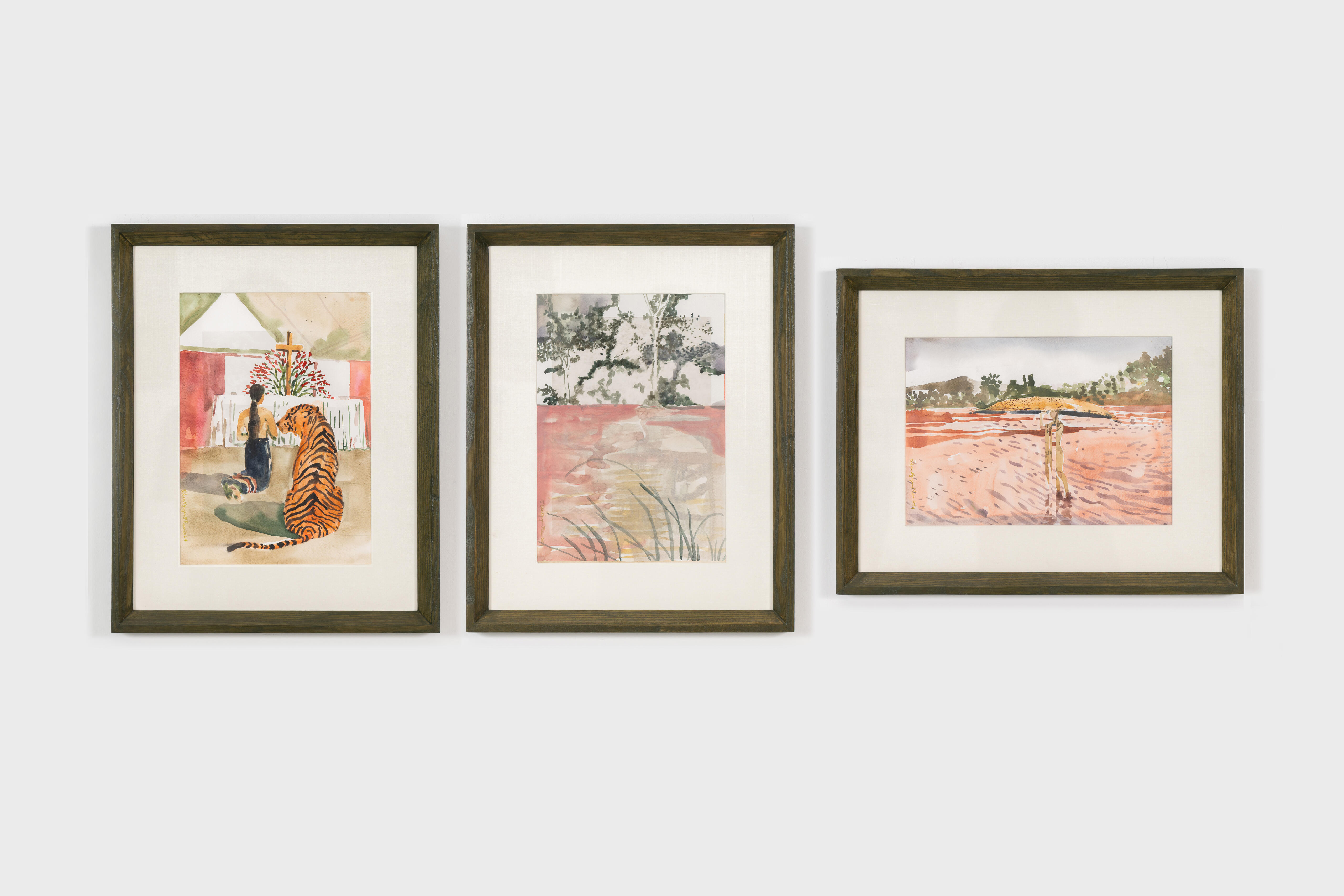
Thảo Nguyên Phan, Forêt, Femme, Folie, 2024. Watercolor and digital print on paper, in artist frame, a set of three. Work: 29.7 x 21 cm; 11 ¾ x 8 ¼ in, Framed: 44.5 x 36 x 3 cm; 17 ½ x 14 ⅛ x 1 ⅛ in
50 x 84 cm; 19 ¾ x 33 ⅛ in
Installation view
Installation view
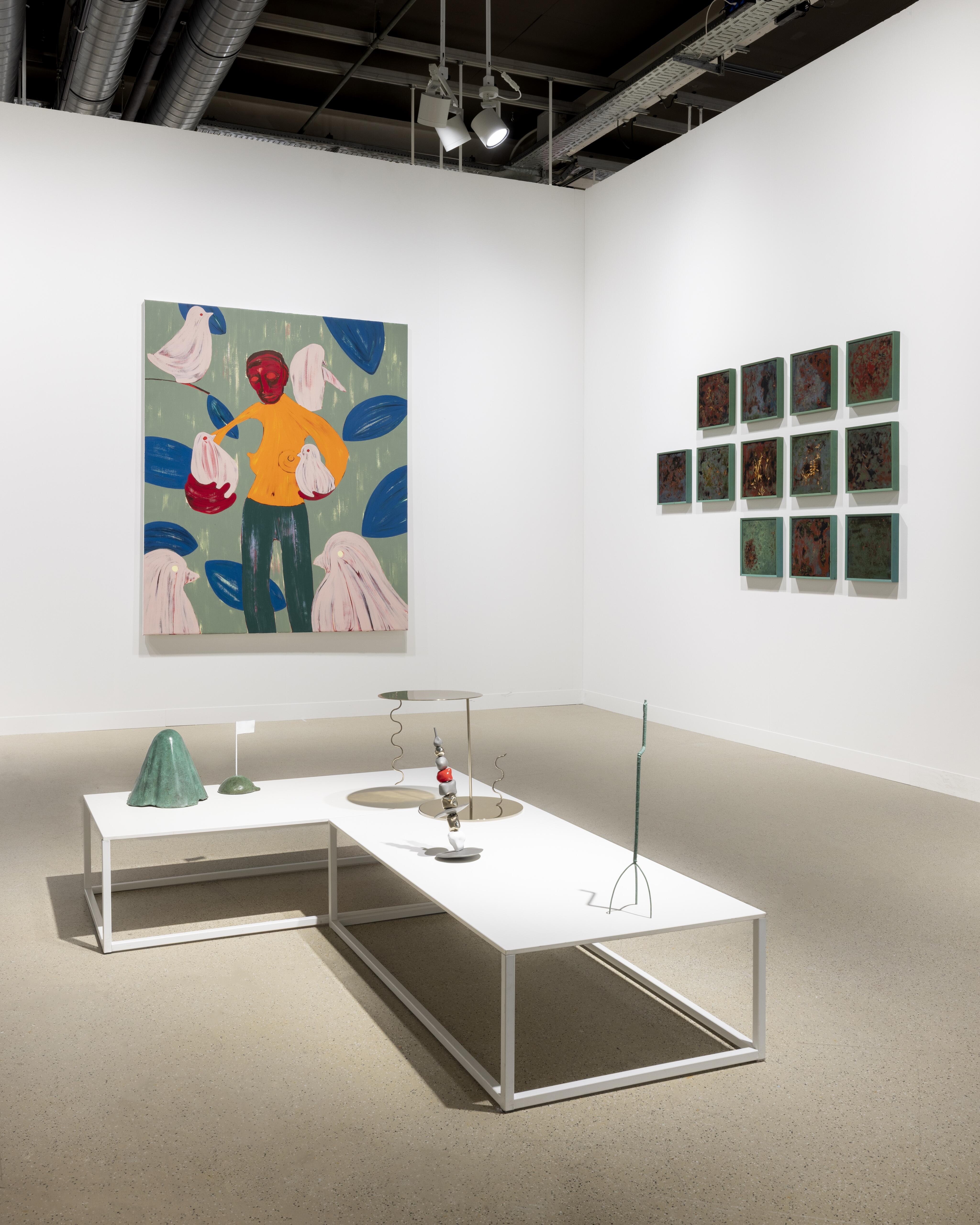
Installation view
Installation view
Length of dowel: 52.5 cm; 20 ⅝ in