Pleased to share Yuan Yuan’s first solo exhibition in the United States, presented by Bortolami Gallery. The paintings on view extend Yuan’s ongoing interest in the dissolution of familiar images and environments. Recurring motifs of manmade landscapes, water, and aquatic life merge with vernacular urban Asian settings and Western art-historical imagery to create exquisitely detailed, dynamic, and surreal worlds. Through both highly refined and broad, gestural brushstrokes, his technique of painting “wet-on-wet” creates surfaces that seem nearly liquid: forms coalesce only to melt back into shifting color and light upon closer inspection. Memory, place, and time remain in a state of constant slippage as familiar spaces give way to something less stable, hovering between recognition and disappearance.
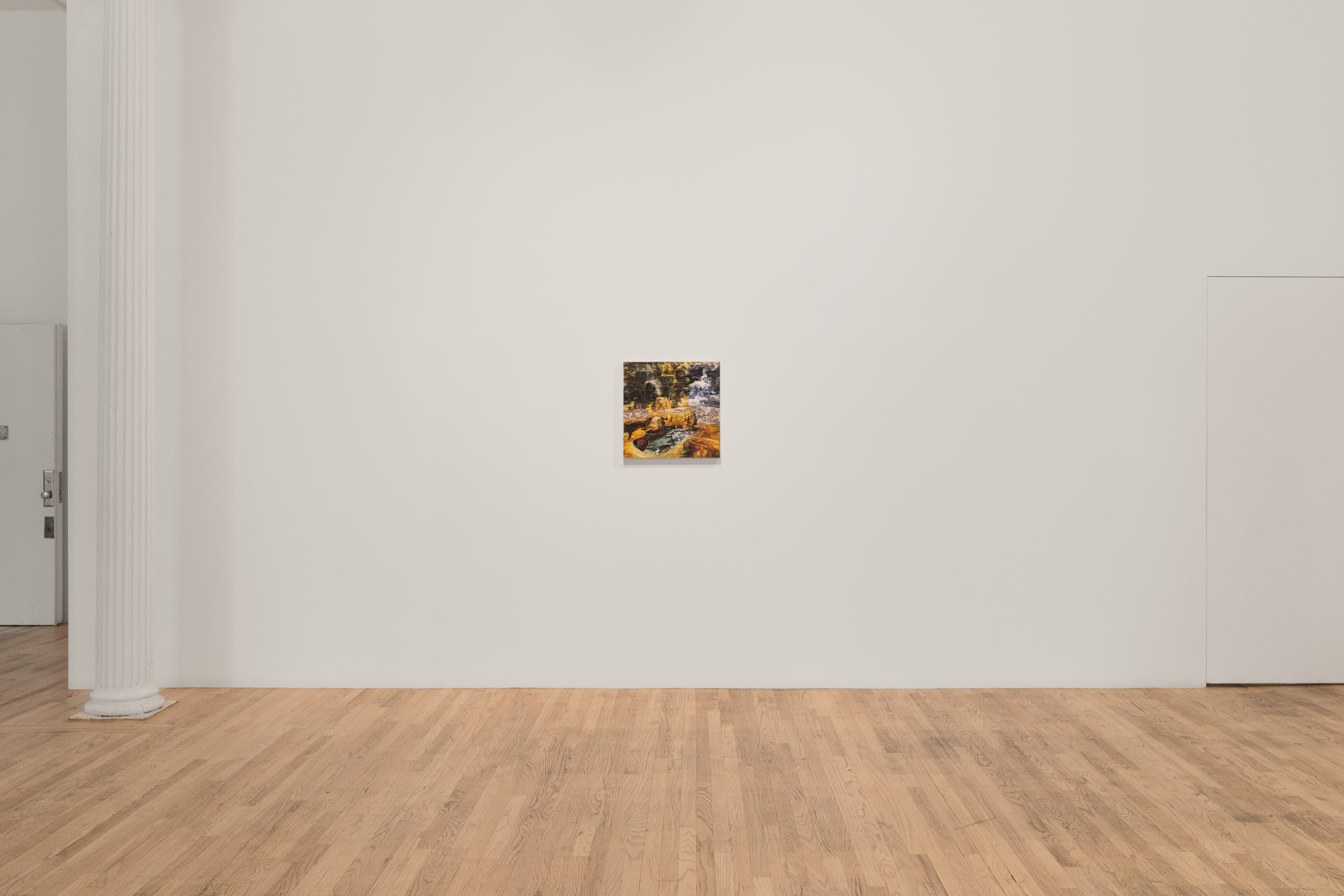
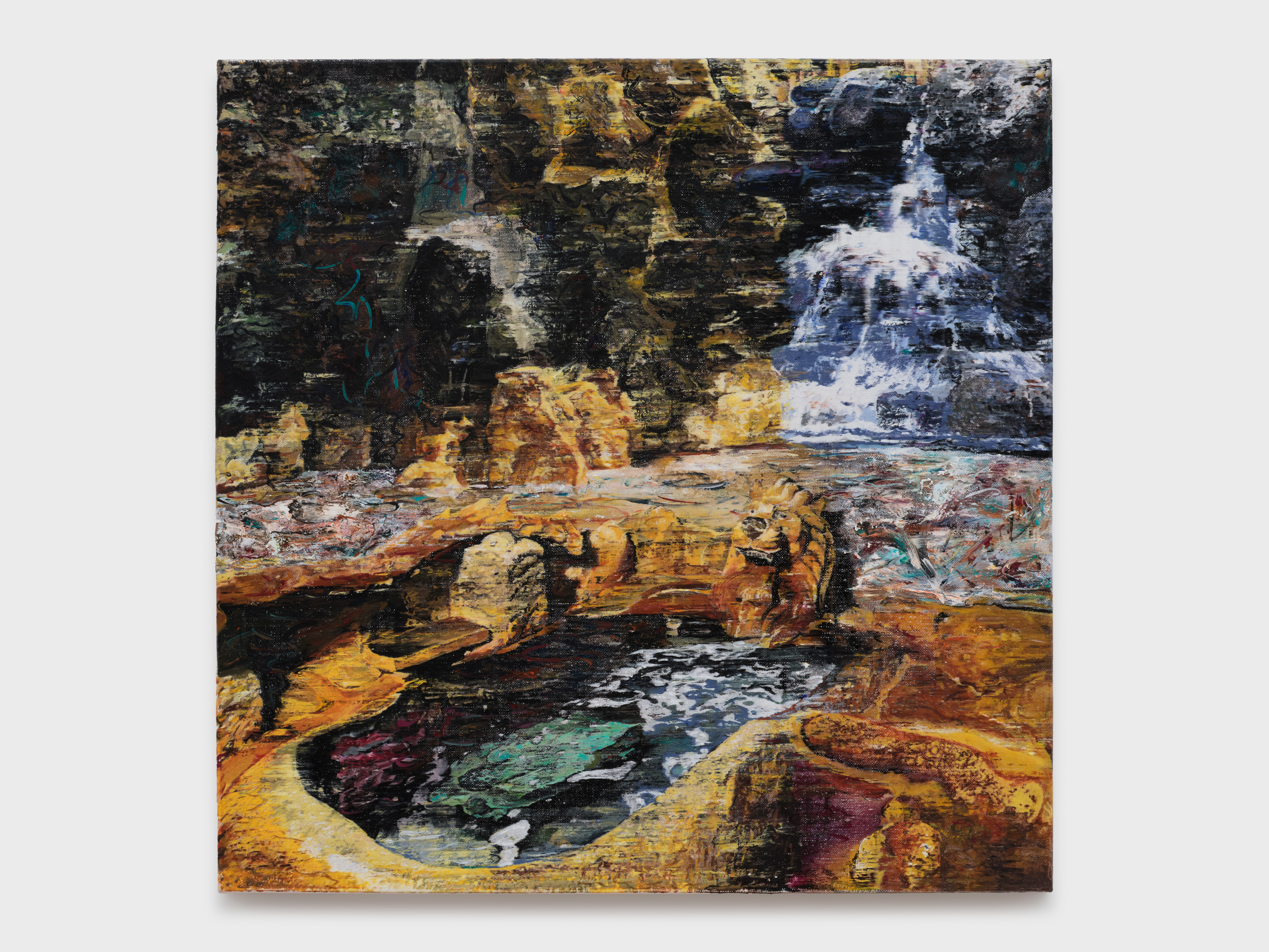
Water, a through-line across the paintings, seeps, spills, and drips within each composition, accelerating the decomposition of each imagined space and suffusing them with a palpable, humid strangeness. Multiple paintings in the exhibition depict traditional Japanese Sento (indoor public bathhouses) and Onsen (hot springs and their accompanying pools) in various states of decay, subjects that Yuan has returned to time and again throughout his oeuvre. These spaces serve as allegories of memories of past ways of communal life and their evolution and disappearance over time, invoking a sense of nostalgia through imagined ruin.
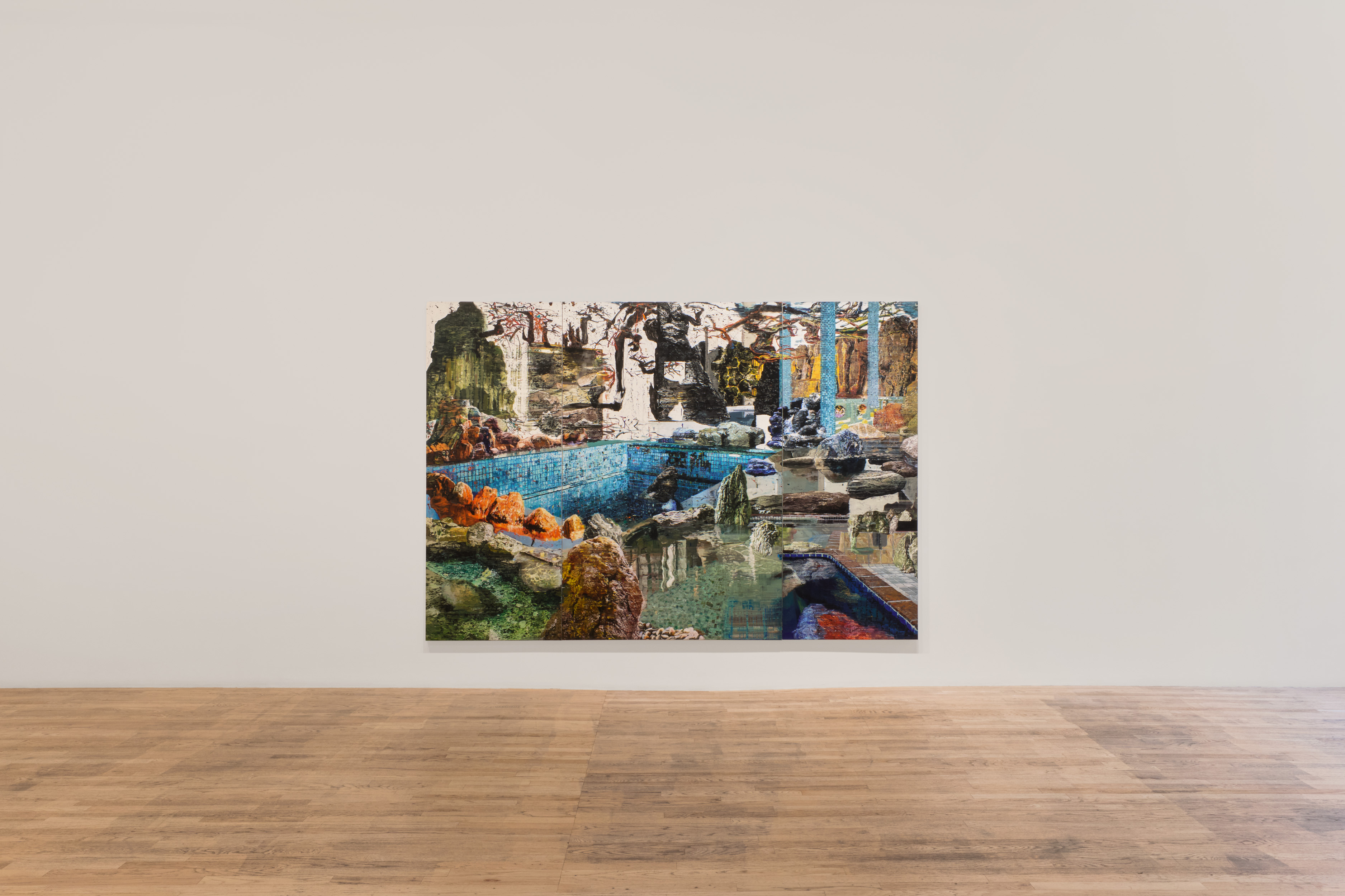
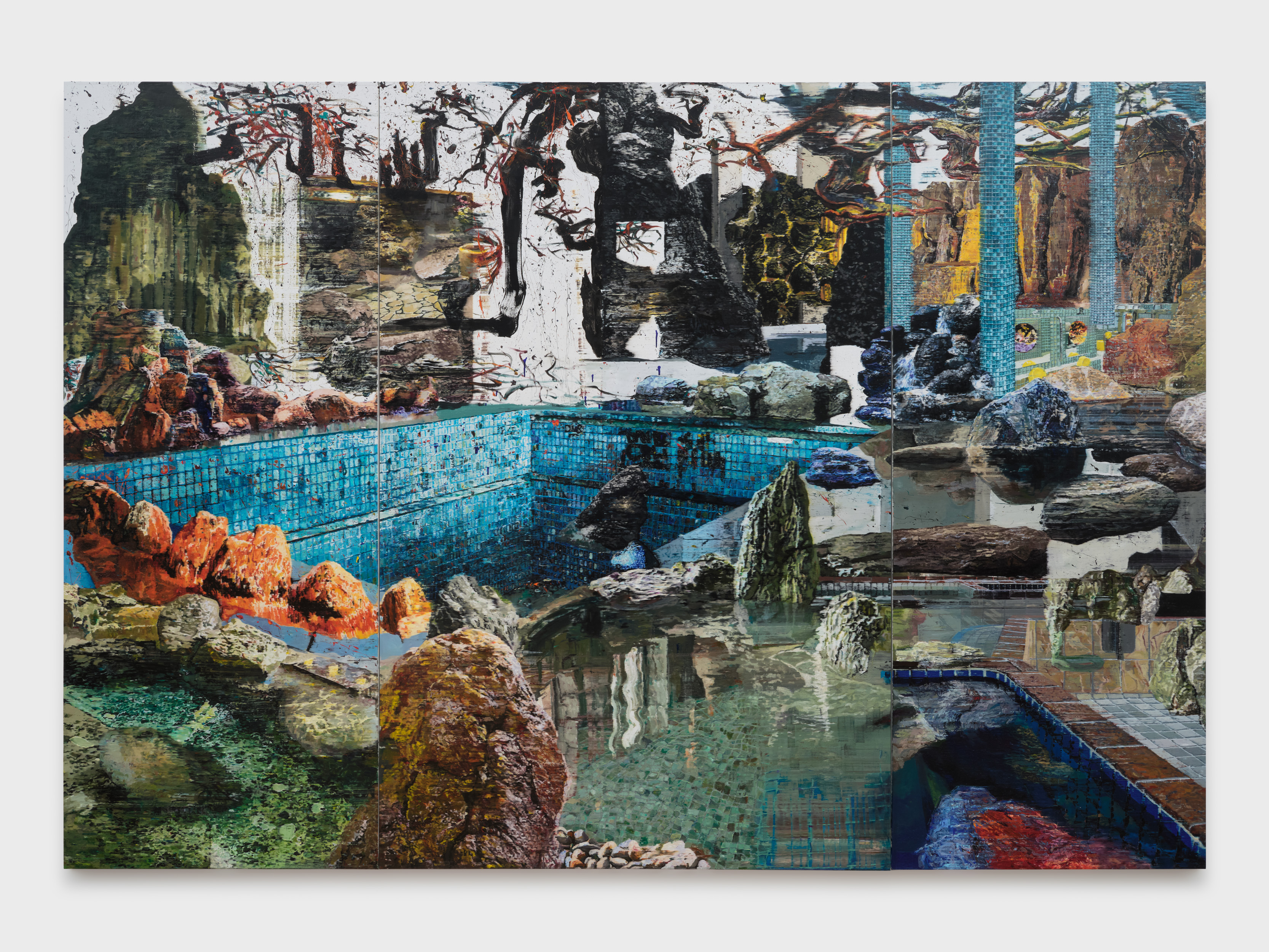
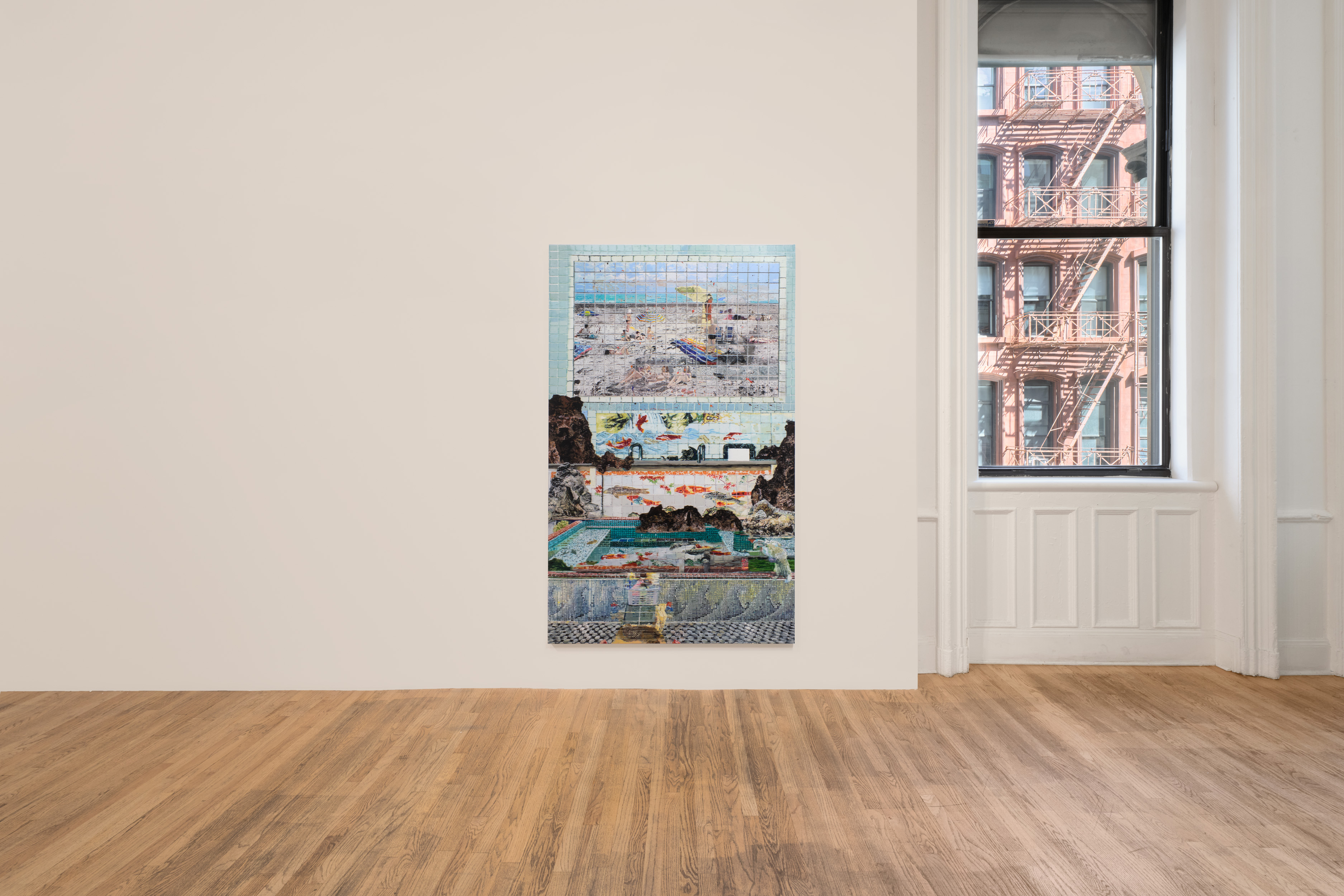
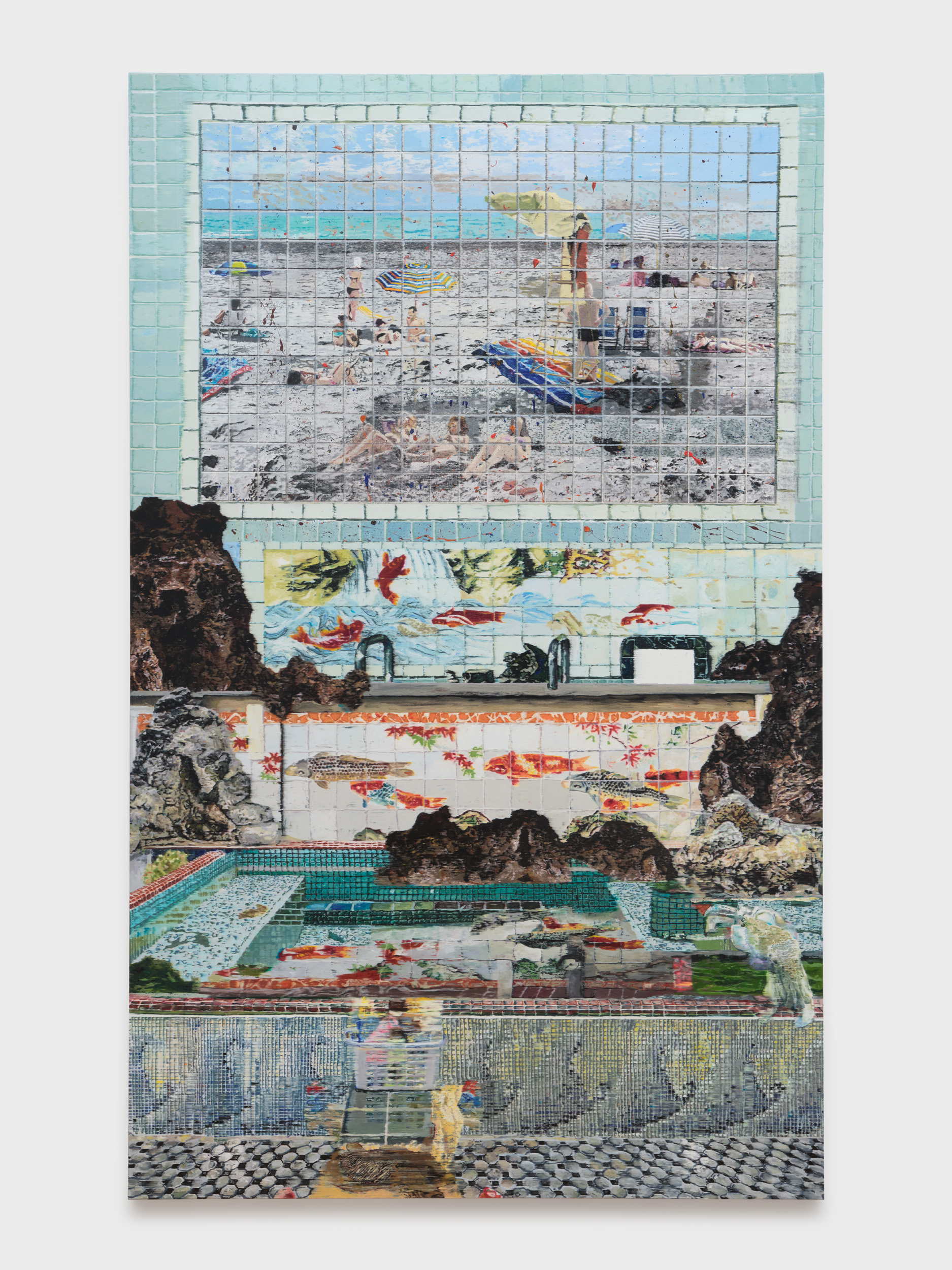
In Clack-Clack, two scenes are combined as a metaphor for the tension between past and present: a vintage, Western beach tableau as a mosaic inside an empty Sento, each representative of a place of communal relaxation and enjoyment. The space evokes a cross-cultural and cross-generational shared memory; a warm sense of familiarity paired with something more foreign and distant. Relatedly, in the triptych Driftscape, layered pools of water and weathered tile paired with forms reminiscent of ancient Chinese ink pine trees recall the experience of wandering through a landscape without a clear sense of orientation. Once sites of collective gathering and cleansing, both physical and spiritual, these spaces have been left to decay: pools drained, branches overgrown, and surfaces cracked and coated with grime.
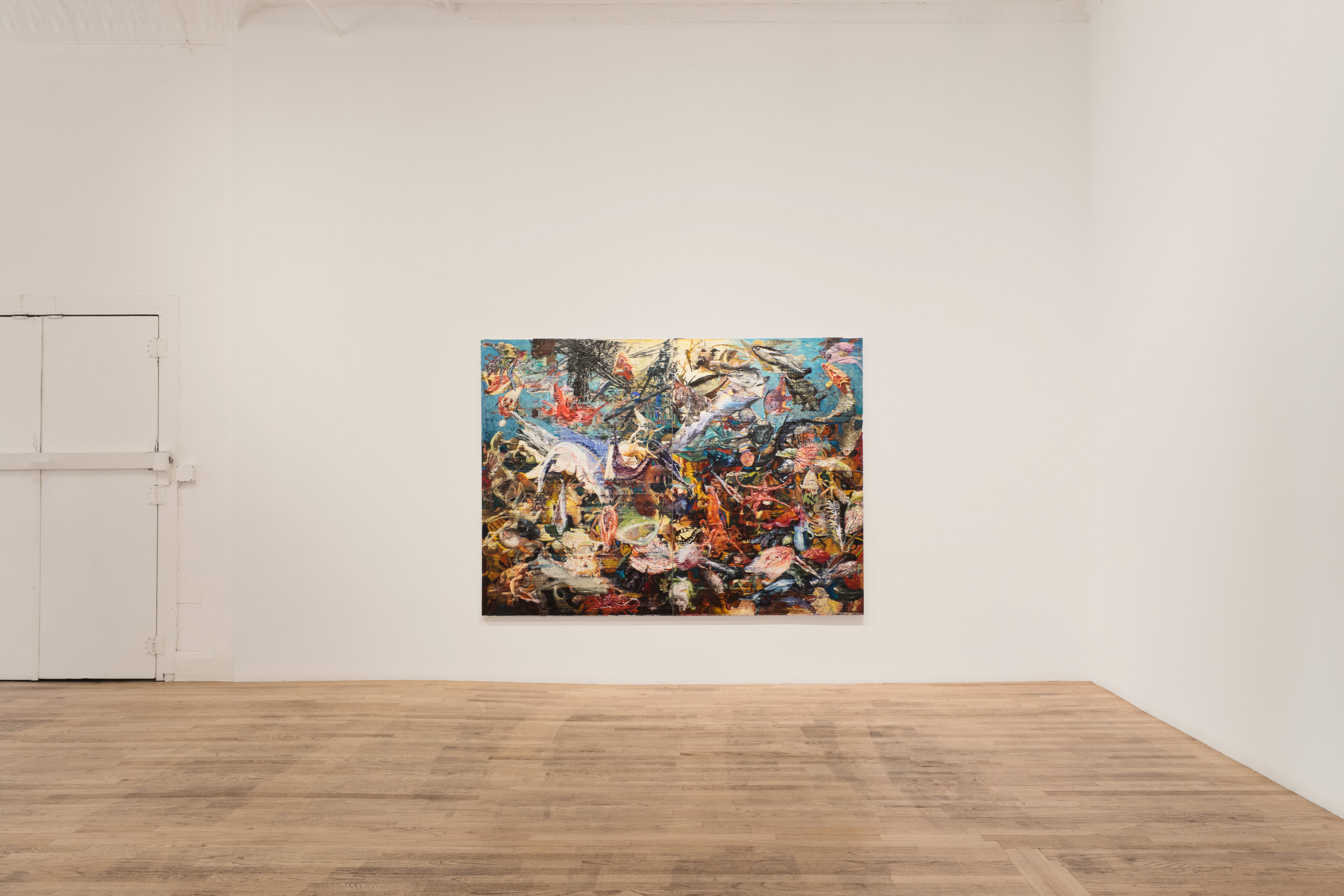
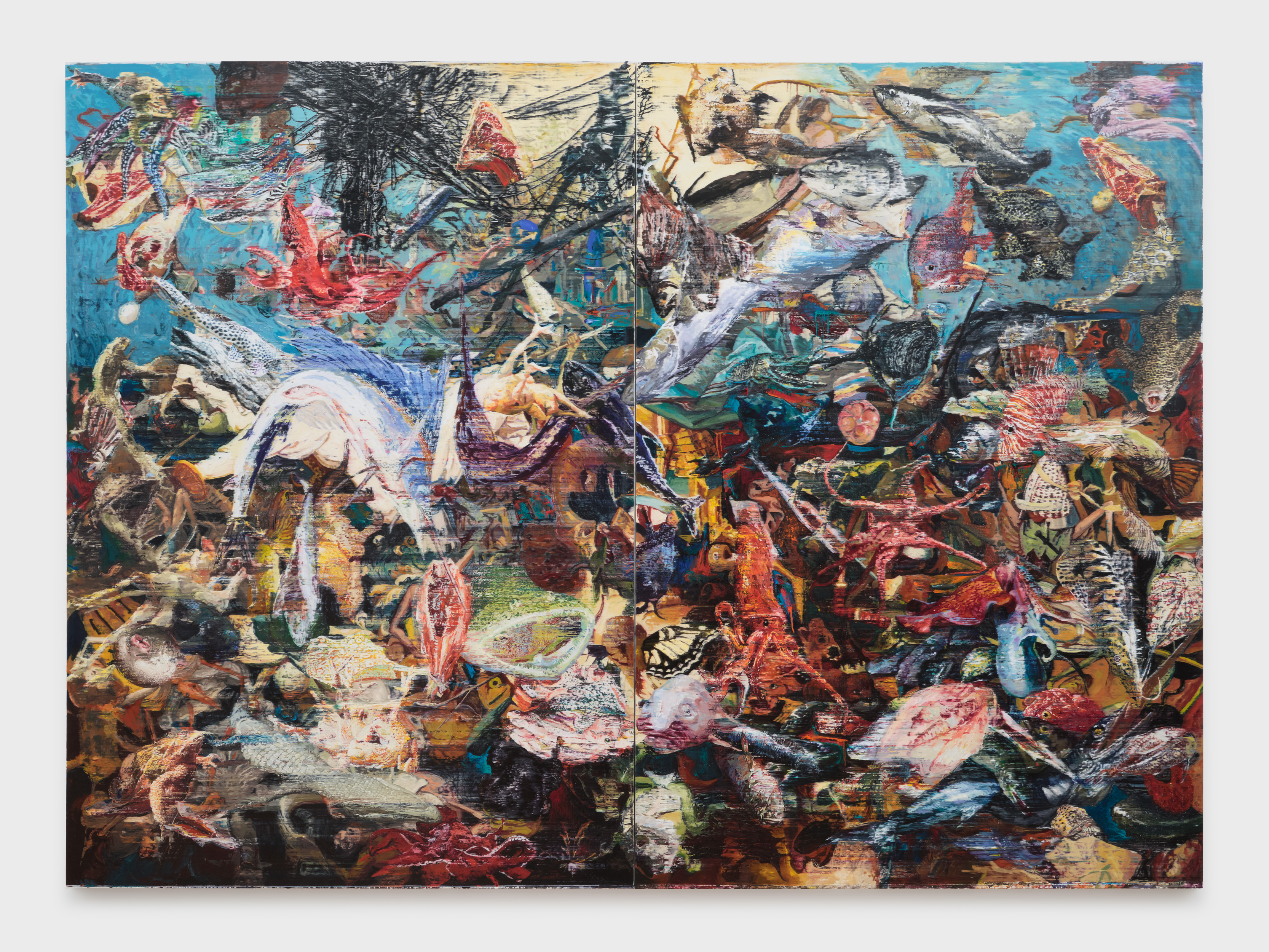
Aquatic life also emerges as both a source of disruption and a means of reconnecting disparate spaces and memories. Slip entangles Yuan’s interpretation of a wet market with the composition of Pieter Bruegel the Elder’s The Fall of the Rebel Angels (1562). Aquatic creatures – some familiar, others less so – tumble across the frame, rhythmically echoing Breugel’s composition. The work truncates art historical time and space, recontextualizing the natural world as Yuan reimagines the sinful “fall” as a wet “slip”. Instead of centering the sinful state of humanity, Yuan instead emphasizes the playful opportunity to rebalance oneself in daily life, reminding the viewer that a slip doesn’t always lead to a fall.
— Courtesy of Bortolami Gallery
Yuan Yuan Yuan Yuan
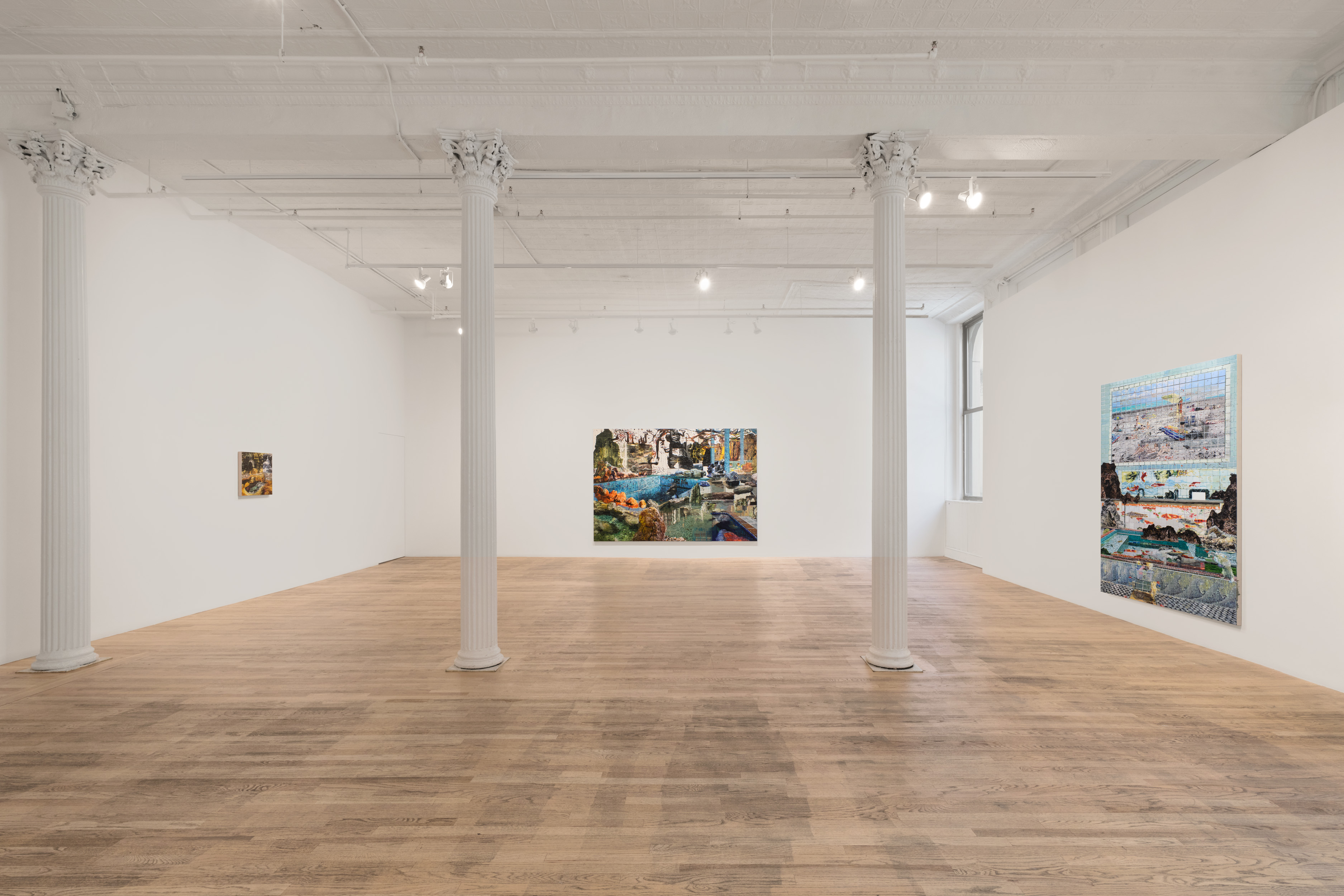
Installation view, “Yuan Yuan”, Bortolami, New York, 2026. Image courtesy the artist and Bortolami, New York. Photography by Guang Xu.